English
 Español
 русский
Content
- 1 What Die Forging Actually Is
- 2 Open Die vs Closed Die: A Quick Comparison
- 3 Hot, Warm, and Cold Die Forging
- 4 The Die Forging Process, Step by Step
- 5 Materials and Tolerances
- 6 Where Die-Forged Parts Earn Their Keep
- 7 Design Details That Save Cost and Headaches
- 8 Quality Checks and Common Pitfalls
- 9 How We Fit Into Your Project
Die forging is one of those processes that looks simple until you stand beside the press. A piece of heated metal goes between two shaped dies, takes form in a few strokes, and comes out with a grain flow and density that a machined block can never quite match. For anyone sourcing load-bearing metal parts, that difference matters.
We have spent years helping customers move from a drawing to a finished metal component, and die forging is often the point where strength, cost, and repeatability meet. This guide covers what die forging is, where it fits, and the details that tend to decide whether a project runs smoothly.
What Die Forging Actually Is
Die forging is a metal forming process that uses matched upper and lower dies with a shaped cavity. A billet is usually heated first, then compressed between the dies by a press or hammer. The metal flows into the cavity, fills the details, and any excess material escapes as flash around the parting line. That flash is trimmed off afterward.
You will also hear the process called closed die forging, impression die forging, or drop forging. The names vary by region and equipment, but the principle is the same: the die controls the shape, and the metal is moved under pressure rather than cut away.
The practical advantage is grain flow. Forging pushes the metal’s internal structure along the part contour, so the finished component tends to have good toughness, fatigue resistance, and directional strength. That is why die-forged parts show up in steering components, connecting rods, suspension parts, industrial machinery, and other places where a crack is not just an inconvenience.
Open Die vs Closed Die: A Quick Comparison
Open die forging and closed die forging are often mentioned together, but they solve different problems. Open die work is closer to traditional blacksmithing at an industrial scale. Closed die work is a production process built around a shaped cavity and repeatability.
| Point of comparison | Open die forging | Closed die forging (die forging) |
|---|---|---|
| Die setup | Flat or simple dies, no fully enclosed cavity | Matched dies with a shaped impression |
| Part geometry | Simple, large, often custom shapes | Complex, repeatable, near-net shapes |
| Typical size | Very large shafts, rings, blocks | Small to medium parts, sometimes larger |
| Tooling investment | Lower | Higher, but spread across production volume |
| Best fit | Low volume, heavy custom parts | Production runs with consistent geometry |
| As-forged tolerance | Wider, usually more machining | Tighter, with less machining stock |
Hot, Warm, and Cold Die Forging
Hot die forging
Hot forging is the most common route for steel and other alloys that need significant shape change. Depending on the material, the billet may be heated to roughly 1,100–1,250°C for steel, or to a lower range for aluminum and copper alloys. The heat lowers flow stress, which helps fill complex cavities and reduces press load. It also allows larger parts to be forged without cracking.
The trade-off is scale, decarburization, and more dimensional movement after cooling. Hot-forged parts usually leave the die with a layer of oxide and a tolerance range that allows for finishing. Heat treatment and machining are often part of the route.
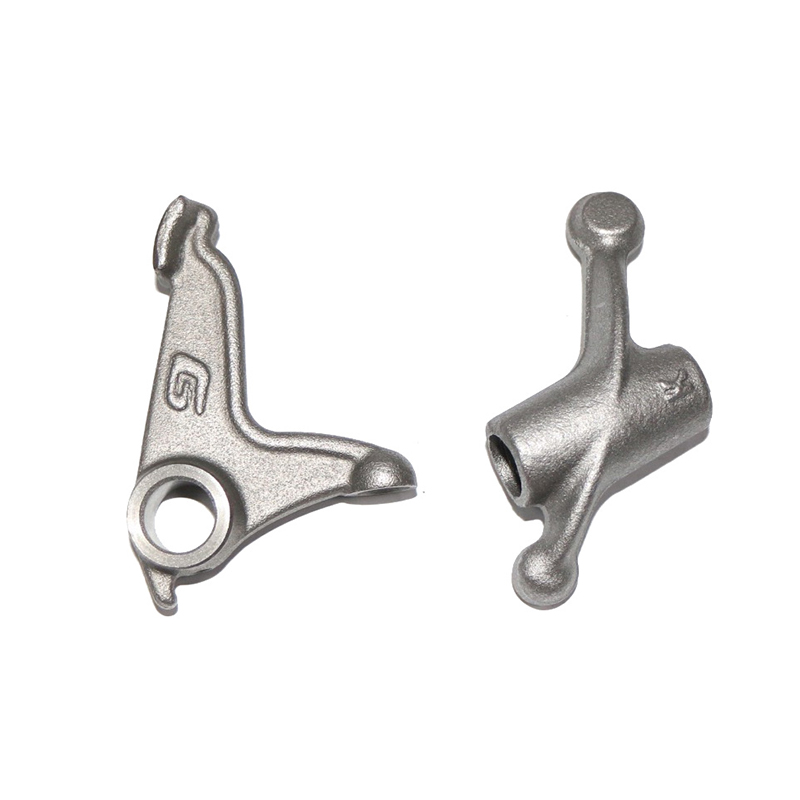 Hot Forged Automotive Components for Powertrain and ChassisExplore precision hot-forged auto components spanning powertrain, chassis and transmission series for comparison with warm-forging trade-offs.View Product →
Warm forging
Warm forging sits between hot and cold working. It reduces oxidation and improves surface finish compared with conventional hot forging, while asking more from the dies and press than cold forging. It is a useful middle ground for parts that need better precision without the full force of a cold process.
Cold die forging
Cold forging takes place at or near room temperature. The metal work-hardens as it flows, which can produce good surface finish, tight tolerances, and strong parts with little or no scale. The limitation is size and forming force: cold forging suits smaller, highly repeatable components, and the dies need careful design and robust support.
Cold-forged parts are common in transmission components, lock parts, pipe fittings, and valve cartridges, where dimensional consistency matters as much as strength.
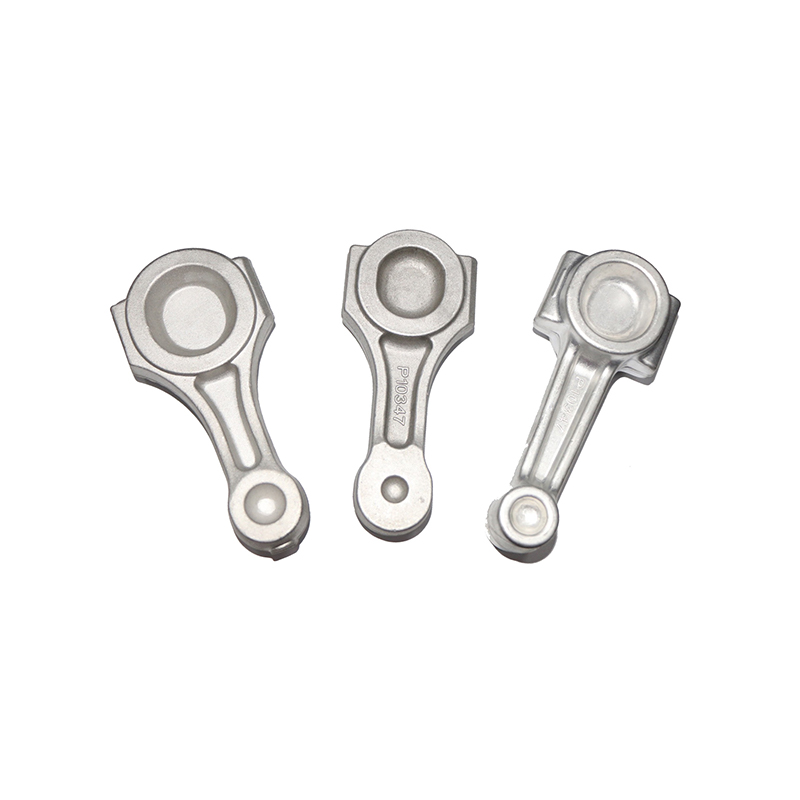 Cold Forged Precision Transmission ComponentsExplore room-temperature cold forging for transmission and connection parts, including motor shaft and hinge series with tight dimensional consistency for mass production.View Product →
The Die Forging Process, Step by Step
No two projects are identical, but a typical die forging route follows a sensible sequence:
- Review the drawing and confirm the forging concept, parting line, machining stock, and critical features.
- Select the material and billet size based on finished weight, flash allowance, and forming load.
- Cut the billet and, where needed, preform it to distribute metal before the final impression.
- Heat the billet to the target forging temperature and control soak time.
- Forge in the closed die using a press or hammer, allowing the cavity to fill and flash to form.
- Trim the flash and, if required, punch holes or perform a coining step.
- Carry out heat treatment such as normalizing, quenching, and tempering to reach the required mechanical properties.
- Remove scale by shot blasting or another cleaning method.
- Machine critical surfaces, holes, threads, or mating faces where forging tolerances are not enough.
- Inspect dimensions, material, hardness, and surface condition before packing.
Die design deserves more attention than it often gets. The parting line, draft angles, corner radii, and rib thickness all influence how well the cavity fills and how long the die lasts. A small change at the drawing stage can remove a lap, reduce flash, or add thousands of stable cycles to the tool.
Materials and Tolerances
Die forging works across a broad material range. Carbon steel and alloy steel are the workhorses for structural and drivetrain parts. Stainless steel is used where corrosion resistance matters. Aluminum and copper alloys are common for lighter components and electrical or thermal applications. Titanium and nickel alloys are possible but usually reserved for demanding sectors where the cost is justified.
- Carbon and alloy steel: connecting rods, shafts, gears, brackets, and machinery parts.
- Stainless steel: marine hardware, food equipment, and corrosion-resistant structural parts.
- Aluminum: lightweight automotive and industrial components.
- Copper alloys: electrical, plumbing, and wear-resistant parts.
As-forged tolerances depend on part size, shape, material, and equipment. For many small to medium closed die parts, a starting point might be around ±0.5 to ±1.0 mm on selected dimensions, with tighter control added through machining. Draft angles commonly sit in the 3–7° range, and fillets should be generous enough to help metal flow. Machining stock of 0.5–2 mm is typical where a clean finish or a precise mating surface is needed.
These are starting points, not universal rules. A thin rib, a deep pocket, or a tight flatness callout can change the whole approach. That is why a drawing review before die cutting is worth the time.
Where Die-Forged Parts Earn Their Keep
Automotive and transportation are the most visible users. Forged steering knuckles, suspension arms, connecting rods, and transmission parts benefit from grain flow and fatigue strength. The same logic applies to agricultural equipment, rail components, and off-highway machinery that sees repeated shock loads.
Industrial equipment is another strong fit. Pump shafts, valve bodies, gear blanks, and heavy machinery links often need a combination of toughness and dimensional stability that forging handles well.
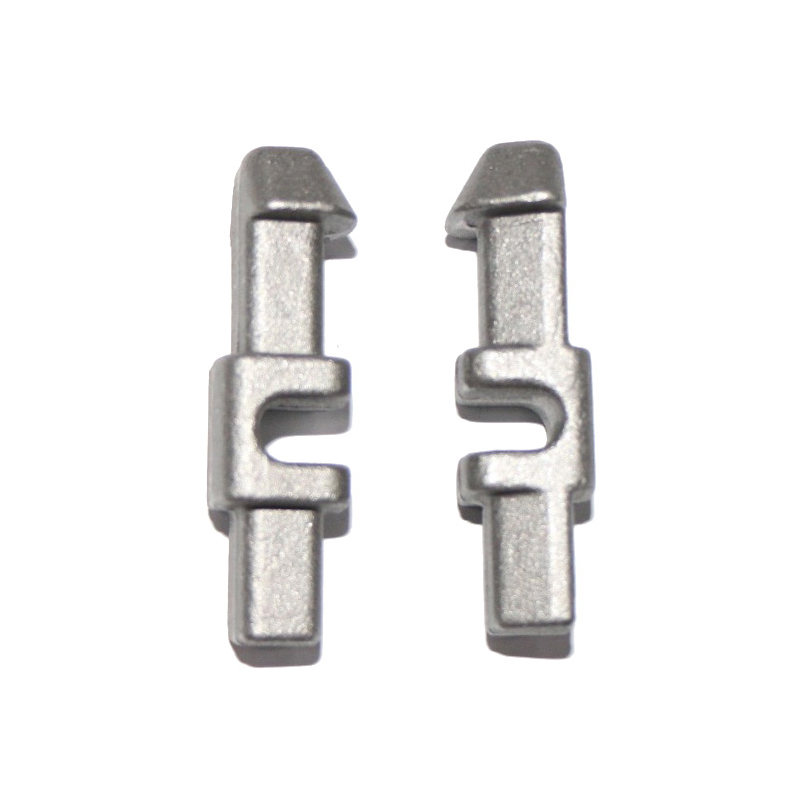 Hot Forged Components for Industrial and Heavy MachineryHeavy-duty hot forging for construction, mining and energy equipment, with large press capacity and alloy-steel parts for high-impact duties.View Product →
Hand tools, hydraulic fittings, and fasteners also use die forging because the process can produce a strong part with a shaped head or body in relatively few operations. In each case, the question is not simply “can this be forged?” but “does the volume justify the die, and does the duty justify the grain flow?”
Design Details That Save Cost and Headaches
Most forging problems are designed in long before the first billet is cut. A few details make a real difference:
- Parting line: place it where the dies can separate cleanly and where flash removal is practical.
- Draft angle: give vertical walls enough draft for the part to release without tearing.
- Fillets and radii: sharp internal corners restrict metal flow and concentrate die stress.
- Wall thickness: avoid thin sections that cool too quickly or fail to fill.
- Machining stock: add stock only where finishing is truly needed; extra stock adds cost and cycle time.
- Quantity: die cost is easier to justify across a stable production run than a one-off order.
- Simulation: for complex shapes, a forming simulation can reveal laps, unfilled corners, and load peaks before tooling is made.
Our own forged parts work covers hot and cold forging, with CNC machining available for the features that need a finer finish. Bringing the forging supplier into the design conversation early usually costs less than fixing a die later.
Quality Checks and Common Pitfalls
Good die forging quality control starts with the material certificate and follows the part through the process. Inspection usually covers dimensions, visual defects, hardness, and heat treatment results. For critical parts, additional checks such as grain flow examination, magnetic particle inspection, ultrasonic testing, or decarburization depth measurement may be specified.
Some common issues are worth watching:
- Laps and folds: often caused by poor preform design or restricted metal flow.
- Underfill: usually a sign of insufficient billet size, low temperature, or poor venting.
- Cracks: can come from excessive strain, wrong temperature, or sharp die corners.
- Decarburization: a surface condition that may need machining allowance and heat treatment control.
- Die wear: a normal cost of production, but it should be monitored so dimensions do not drift beyond tolerance.
A supplier who can explain these risks clearly, and show how the process plan addresses them, is usually a better partner than one who simply quotes the lowest piece price.
How We Fit Into Your Project
Ningbo Chengen Machinery has been manufacturing metal components since 2008 from our 12,000 m² facility in Ningbo, China. Our work is not limited to one process. We combine casting, hot and cold forging, CNC machining, stamping, and laser cutting so that a project can move from rough forming to finished part without being handed between unrelated suppliers.
For die-forged components, that means we can review the drawing, advise on the forging route, make the tooling, forge the part, trim and heat treat it, then machine critical features and inspect before shipment. Our quality management follows ISO principles, and the team is used to working with engineering drawings, samples, and international specifications.
If you are planning a forged part, the most useful first step is a drawing and an honest conversation about function, quantity, and tolerance. You can send us the details, and we will tell you what we would forge, what we would machine, and where the cost really sits.
Die forging is not the right answer for every metal part. But when a component needs strength, fatigue resistance, and repeatable production, it is hard to beat. The best results come from treating forging as part of the design process, not just a line on a purchase order.