English
 Español
 русский
Content
- 1 What Are Gray Iron and Ductile Iron Castings?
- 2 Key Mechanical Differences at a Glance
- 3 Strength, Ductility, and Impact Behavior
- 4 Vibration Damping, Thermal Conductivity, and Wear Resistance
- 5 Casting Process and Machinability
- 6 How to Choose Between Gray Iron and Ductile Iron
- 7 When Iron Castings Are Not the Final Answer
- 8 Why Work with a Partner Who Understands Casting and Machining
- 9 Conclusion: Both Materials Deserve a Place in Your Design Toolbox
Few material decisions cause as much debate in a machine shop as the choice between gray and ductile iron castings. Both are dependable, widely used cast irons, but they serve different purposes. At Ningbo Chengen Machinery, we have spent years manufacturing complex cast and machined parts for construction, agricultural, automotive, and fluid-power customers. Again and again, we see that choosing the right iron grade is the difference between a part that lasts and one that fails early.
What Are Gray Iron and Ductile Iron Castings?
Gray iron gets its name from the dark gray fracture surface when a casting is broken. The carbon in gray iron is present as interconnected graphite flakes. These flakes give gray iron excellent vibration damping and machinability, but they also create sharp stress concentrations that limit ductility and impact resistance.
Ductile iron, also called nodular cast iron, has its carbon in the form of spherical graphite nodules. The nodules are formed by adding magnesium or cerium to the molten iron before pouring. Because round graphite particles do not create the same internal notches as flakes, ductile iron can stretch, bend, and absorb shock much more than gray iron. This one microstructural difference drives nearly every practical comparison between the two materials.
Key Mechanical Differences at a Glance
To make the material selection easier, we use a simple comparison table with customers before reviewing drawings. These values are typical ranges for common foundry grades, not guarantees for a specific part.
| Property | Gray Iron | Ductile Iron |
|---|---|---|
| Graphite shape | Flakes | Spheroids |
| Tensile strength | 20,000-60,000 psi | 60,000-100,000 psi |
| Yield strength | No defined yield point | 40,000-70,000 psi |
| Elongation | Less than 1% | 2-18% |
| Impact resistance | ~2 ft-lb | ~7 ft-lb |
| Vibration damping | Excellent | Moderate |
| Thermal conductivity | Higher | Lower |
| Machinability | Excellent | Good |
| Relative cost | Lower | Higher |
The table is a starting point, not a final answer. For safety-critical parts, always verify the selected material against your loading conditions and quality requirements.
Strength, Ductility, and Impact Behavior
Ductile iron's minimum tensile strength is typically 60,000 psi for grade 60-40-18, while gray iron ranges from about 20,000 psi in class 20 to about 60,000 psi in high-strength class 60. More important than ultimate strength is behavior after yielding. Ductile iron has a defined yield strength and can deform plastically before breaking. Gray iron remains brittle and fractures with little visible warning.
This is why ductile iron is chosen for crankshafts, gears, pipe flanges, and suspension brackets, where bolts and loads create bending or shock. Gray iron, by contrast, is better suited for parts that remain in compression or carry steady loads without impact. The sharp graphite flakes in gray iron act as internal stress raisers, so the material has little ability to tolerate localized strain.
Vibration Damping, Thermal Conductivity, and Wear Resistance
Gray iron is famous for vibration damping. The flake graphite produces internal friction, and the material shows non-elastic behavior even at very low stresses. That makes gray iron an excellent choice for machine bases, engine blocks, brake drums, and other components where noise and vibration need to be absorbed. Ductile iron, because its graphite is spherical, does not damp vibration as well, but it wins in fatigue strength. If a part is loaded repeatedly, ductile iron's ability to tolerate cyclic stress usually makes it the safer material.
Gray iron also tends to conduct heat better, which benefits brake rotors, cylinder heads, and similar heat-exposed parts. Ductile iron's lower thermal conductivity is rarely a disadvantage in structural applications. Both materials contain graphite, so gray and ductile iron castings often provide naturally good sliding wear behavior under lubricated conditions.
Casting Process and Machinability
Production behavior is just as important as performance in service. Gray iron is one of the easiest metals to cast. Its high carbon and silicon content gives it excellent fluidity, so it fills thin walls, intricate core shapes, and fine details with less shrinkage. It also machines beautifully; the broken chips keep tooling cool and leave a smooth finish. This is why gray iron has historically been used for complex housings and decorative architectural castings.
Ductile iron needs greater melt control. The magnesium treatment that forms nodules can create dross and chemical reactions, and the metal contracts more during cooling, so feeding and riser design require careful attention. Machining ductile iron requires rigid setups, sharper cutting edges, and appropriate speeds, because the material is not brittle enough to break into short chips as easily as gray iron. The machining cost is therefore slightly higher, but ductile iron can be heat-treated and can replace steel forgings in many structural parts.
How to Choose Between Gray Iron and Ductile Iron
Here is the quick mental checklist we use when reviewing a new drawing:
- Choose gray iron when your priority is vibration damping, machinability, or low piece cost.
- Choose gray iron for intricate, thin-wall castings that need clean fill and minimal shrinkage.
- Choose ductile iron when you need impact resistance, ductility, or fatigue strength.
- Choose ductile iron for safety-critical parts such as axle brackets, couplings, lifting hardware, and pressure-containing components.
- If the section is large and the part will see high stress, ductile iron is safer than gray iron because it is less sensitive to stress concentrations.
Gray iron is common in engine components, brake rotors, pump bodies, and machine tool bases. Ductile iron appears in crankshafts, gears, valves, pipe fittings, and heavy machinery parts. In many projects, the choice is not obvious until you consider the full load history and the machining sequence.
When Iron Castings Are Not the Final Answer
That checklist covers the iron family. But sometimes the part requirements push us into a different material family entirely.
For heavy construction and mining equipment, ductile iron can be pushed to its practical limit. When impact and fatigue dominate, our next step is often alloy steel precision casting, which gives a higher strength ceiling and a more uniform microstructure.
 Alloy Steel Precision Castings for Heavy Construction and Mining MachineryDesigned for earthmoving, mining, and lifting equipment, these investment cast components offer high strength, wear resistance, and impact toughness. They suit severe operating conditions where ductile iron may reach its limits.View Product →
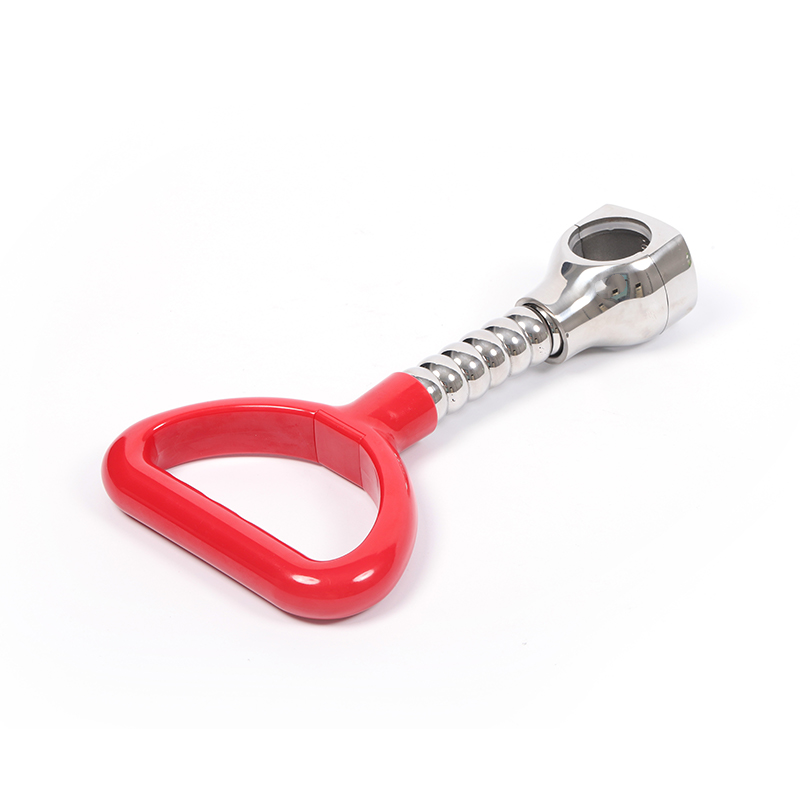
For rail-transit components exposed to weather, moisture, and repeated passenger loads, corrosion resistance becomes a deciding factor. Stainless steel precision casting avoids the rust problems that painted gray or ductile iron parts can develop while still allowing complex geometry.
 Stainless Steel Precision Cast Rail Transit ComponentsMade from 304 or 316 stainless steel via investment casting, these parts include subway handrails and interior fittings. They resist corrosion and withstand weather, moisture, and passenger loads, ideal for rail applications.View Product →
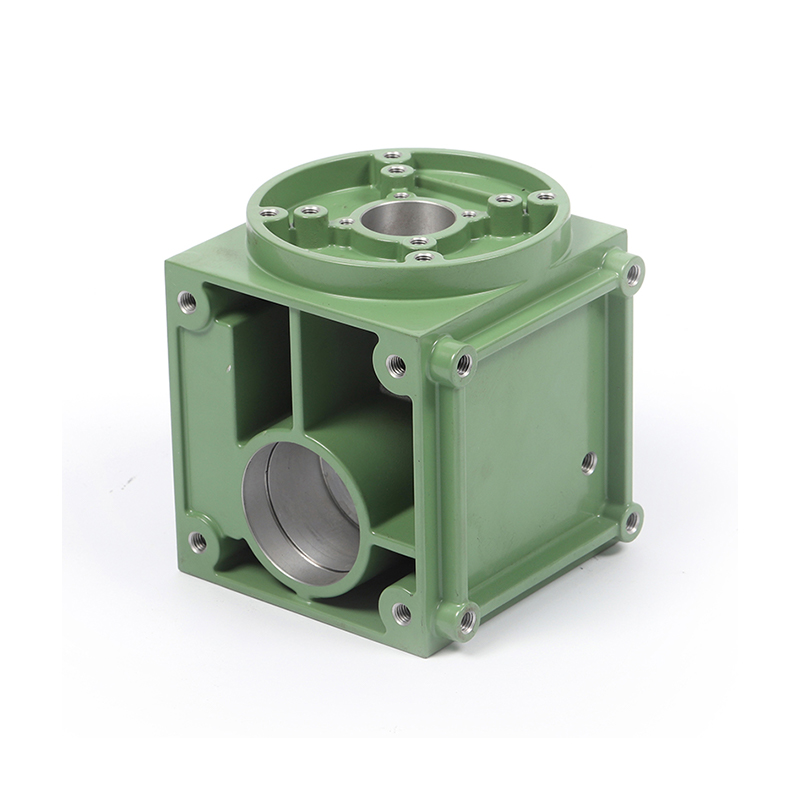
And when a part has historically been an iron casting but the new design needs to be lighter, aluminum die casting is the alternative we compare. Industrial pump housings and hydraulic valve bodies are typical examples where weight reduction matters without sacrificing pressure integrity.
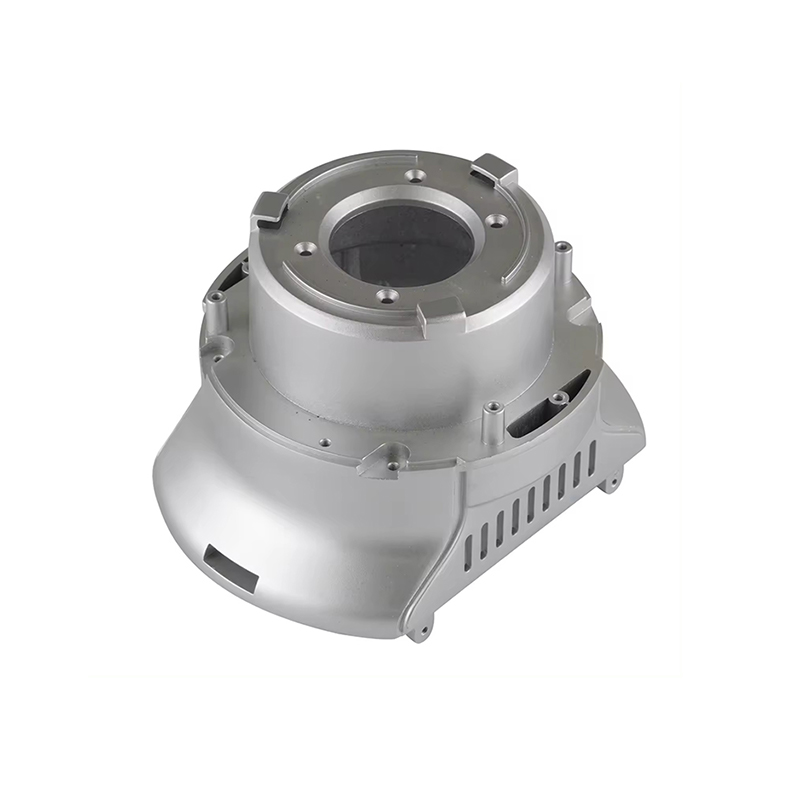 Aluminum Die-Cast Pump Housings and Hydraulic Valve BodiesHigh-pressure aluminum die-casting delivers lightweight, corrosion-resistant components for pumps and valves. Suitable for petrochemical, water treatment, and construction machinery, they maintain pressure integrity while reducing weight compared to iron.View Product →
Why Work with a Partner Who Understands Casting and Machining
Choosing the material is only half the job. A casting is not finished until it is machined, inspected, and delivered to tolerance. We built Chengen to combine casting, forging, CNC machining, and secondary operations under one roof. This means that when we recommend gray iron or ductile iron, we can also design the machining process around that material's unique behavior. You can learn more about our integrated approach on our about page. If you have a drawing and want an honest comparison of materials for your part, contact our team for a quote.
Conclusion: Both Materials Deserve a Place in Your Design Toolbox
Gray iron and ductile iron each have a clear role in modern manufacturing. Gray iron is economical, stable, and excellent at absorbing vibration; ductile iron adds the strength and toughness needed for structural and safety-critical components. The right choice requires more than a glance at a tensile chart. It requires understanding the shape of the part, the way it will be loaded, and how it will be machined. At Chengen, we are happy to work through that decision with you. Choose the right material, get the right process, and the part will serve you for years.