English
 Español
 русский
Content
Cast iron has been a workhorse of industrial manufacturing for centuries, and even in an age of aluminium alloys and advanced steels, it remains indispensable. When a project calls for cast iron, the decision usually comes down to two materials: grey cast iron and ductile iron. They look similar in the raw, yet their internal structures and mechanical behaviour are profoundly different. This guide compares ductile iron vs grey cast iron across strength, machinability, damping, wear and cost, so you can specify the right material with confidence.
What Is Grey Cast Iron?
Grey cast iron takes its name from the grey, graphite-rich surface visible when a casting is fractured. In this material, carbon precipitates as graphite flakes distributed through a pearlitic or ferritic matrix. Those flakes are what make grey iron behave the way it does. They create natural stress risers that limit tensile strength and give the material virtually no plastic deformation before fracture. A typical grey iron has a tensile strength between 140 and 420 MPa, with elongation below 1%. Yet the same flakes are also the source of grey iron's practical strengths: they break up machining chips, damp vibration exceptionally well, and help conduct heat away from hot zones. That is why grey cast iron remains the default choice for machine tool beds, engine blocks, brake discs and pump housings.
What Is Ductile Iron?
Ductile iron, also known as nodular iron or spheroidal graphite (SG) iron, was commercialized in the late 1940s. Its defining feature is the shape of the graphite. A small addition of magnesium or cerium to the molten iron causes the graphite to solidify as tiny spheres instead of flakes. Because spheres do not concentrate stress the way sharp flakes do, ductile iron can stretch and absorb energy before breaking. Depending on the grade, ductile iron offers tensile strengths from 415 MPa to well over 690 MPa and elongation from 2% to 18%. It also has much better impact resistance and fatigue strength than grey iron. These properties allow ductile iron to replace cast steel and even some forgings in structural applications, from automotive crankshafts to construction machinery components. The material is specified under standards such as ASTM A536 and ISO 1083.
Ductile Iron vs Grey Cast Iron: Direct Comparison
The table below summarizes the main engineering differences between the two materials.
| Property | Grey Cast Iron | Ductile Iron |
|---|---|---|
| Microstructure | Graphite flakes | Graphite spheroids |
| Tensile strength | 140–420 MPa | 415–690+ MPa |
| Elongation at break | Less than 1% | 2–18% |
| Impact resistance | Poor | Good |
| Vibration damping | Excellent | Moderate |
| Machinability | Excellent | Good |
| Wear resistance | Good | Very good |
| Fatigue strength | Lower | Higher |
| Relative cost | Lower | Higher |
Key Differences Explained
Strength and Ductility
The most important difference is how the two materials behave under load. Grey cast iron is strong in compression but weak in tension and has essentially no yield point; it fractures suddenly when overloaded. Ductile iron, by contrast, yields and deforms noticeably before failure. For safety-critical parts such as suspension arms, pressure-containing hydraulic components and lifting equipment, ductile iron is the logical choice. The extra ductility provides a visible warning before a part finally breaks, which is invaluable in machinery that operators rely on every day.
Machinability and Vibration Damping
In the machine shop, grey cast iron is the friendlier material. Graphite flakes act as a built-in chip breaker and dry lubricant, so cutting tools last longer and surface finishes are easier to control. Grey iron's damping capacity is also exceptional: it converts mechanical vibration into heat, which is why the beds of precision machine tools and the housings of gearboxes are so often cast from it. Ductile iron is harder and tougher, so it demands more from tooling, but modern carbide and ceramic inserts handle it without difficulty. The trade-off is that ductile iron's higher strength usually permits thinner walls and lighter castings, which can offset the higher material and machining cost.
Wear Resistance and Fatigue Life
Under sliding wear, grey iron can outperform ductile iron because graphite flakes exposed at the surface act as a solid lubricant. Ductile iron, however, is superior in rolling contact and high-stress abrasive conditions. It also has a significantly higher fatigue endurance limit, making it the preferred material for shafts, gears and other components subjected to repeated cyclic loading. When a part must survive millions of cycles without cracking, ductile iron is almost always the safer engineering answer.
Cost and Availability
Grey cast iron is generally less expensive to produce. Its melt requires less tight process control, and its machinability keeps finishing costs low. Ductile iron demands disciplined control of the magnesium addition and closer attention throughout casting, which raises its price. Still, when the total cost of ownership includes weight, reliability and service life, ductile iron often wins. A ductile iron casting can be designed with thinner walls than a grey iron casting of equal strength, saving material and reducing the finished component's weight.
Typical Applications
Where Grey Cast Iron Remains the Standard
Grey iron is the classic material for motor housings, pump bodies, valve housings, brake discs and machine tool structures. No other cast material matches its combination of low material cost, excellent machinability, intrinsic damping and thermal conductivity. For these applications, grey iron is difficult to displace. Yet engineers are constantly looking for ways to reduce weight, particularly in mobile equipment. Aluminium die-cast pump housings and hydraulic valve bodies, for example, are now common in hydraulic systems where a lighter enclosure and better corrosion resistance are priorities.
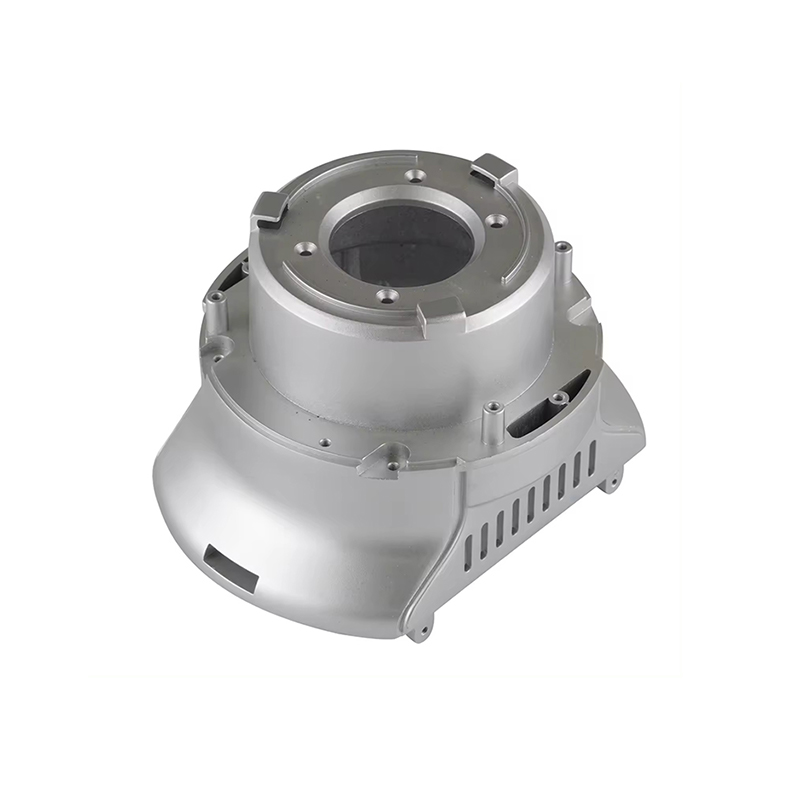 Aluminum Die-Cast Pump Housings and Hydraulic Valve BodiesThis product page details lightweight, corrosion-resistant aluminum die-cast components for industrial pumps and hydraulic systems, covering petrochemical, water treatment, and construction applications—relevant where reducing weight and improving corrosion resistance are priorities.View Product →
Electric motor housings are another grey iron stronghold that is gradually opening up to lighter materials. Precision aluminium die-cast motor housings provide excellent heat dissipation and significant weight savings for compact motors in automotive and industrial drives.
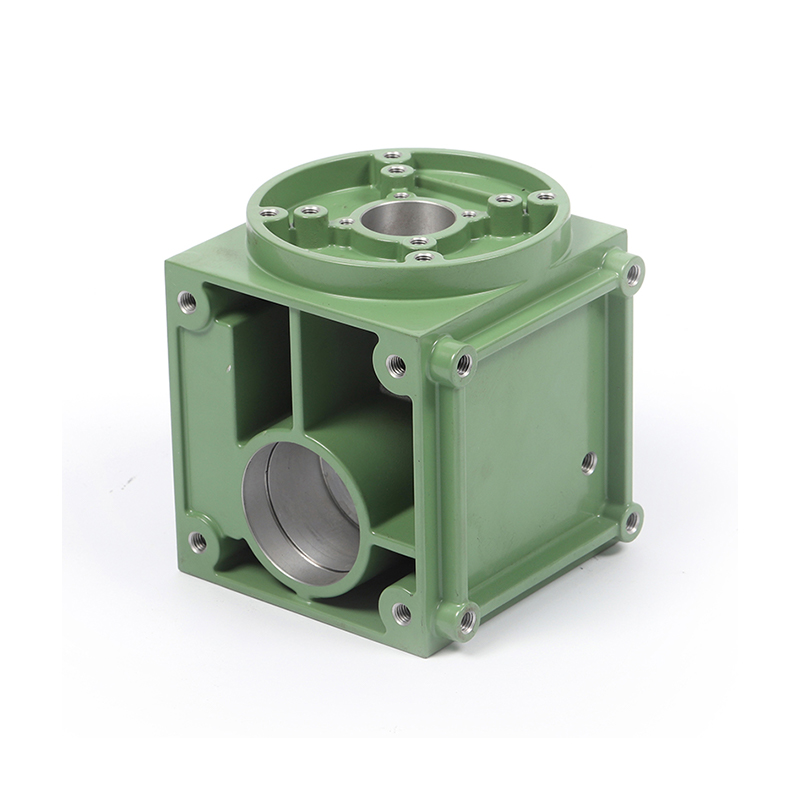 Precision Aluminum Die-Cast Motor Housings for 50W-5kW MotorsFocused on small to medium motor housings, this page highlights high-pressure vacuum die casting with thin-wall designs and thermal management. It is useful for engineers seeking weight savings and heat dissipation in compact automotive and industrial motor applications.View Product →
Where Ductile Iron Is Preferred
Ductile iron is the material of choice for heavy-duty parts that must absorb impact and endure cyclic stress: automotive crankshafts, suspension components, gearbox housings, pipe fittings and construction machinery parts. Its high strength-to-weight ratio makes it a direct competitor to cast steel. In some construction machinery designs, engineers select alloy steel precision casting instead, particularly when a component must combine complex geometry, high strength and tight tolerances. Both routes produce dependable parts; the right choice depends on the loading conditions and the required production volume.
 Alloy Steel Precision Cast Parts for Construction MachineryThis page showcases investment-cast alloy steel components like bucket teeth and crusher jaws, offering high strength and wear resistance. It is relevant for heavy-duty machinery parts that must withstand impact and cyclic stress, competing with ductile iron solutions.View Product →
How to Choose Between Grey Cast Iron and Ductile Iron
Start by asking three questions about the component and its service environment.
- What loads will the part see? If it is mainly compressed, must damp vibration and will not be exposed to impact, grey iron delivers the lowest cost. If it will be bent, twisted, impacted or cyclically loaded, ductile iron is the safer material.
- How will the part be machined and finished? Grey iron machines beautifully but limits design freedom because of its brittleness. Ductile iron allows thinner walls and stronger cross-sections at the cost of a harder cutting process.
- What does the full lifecycle cost look like? A lighter ductile iron part can reduce material consumption, shipping weight and energy use in the final product, often outweighing the higher purchase price.
Material selection cannot be separated from process selection. The mechanical properties of a casting depend as much on the founder's metallurgical control as on the grade specified. Understanding the basics of the casting process helps you ask better questions and evaluate a supplier's capability. If a grey or ductile iron part is not the most economical route, other processes such as investment casting, forging or CNC machining may serve the requirement better. The key is to evaluate the complete design, not just the material name.
At Chengen Machinery, we help customers compare material options and then carry the selected design through casting, machining and surface treatment in one place. Contact our team to discuss your component requirements, and we will recommend the most reliable and cost-effective manufacturing solution.