English
 Español
 русский
Content
Over the years, we have seen aluminum investment casting evolve from a niche process into one of the most dependable ways to produce lightweight, high-integrity metal components. This guide explains how the process works, why design teams choose it, and how a one-stop manufacturing partner can help you move from concept to finished part with fewer headaches and better results.
What Is Aluminum Investment Casting?
Aluminum investment casting is a precision metal-forming process that begins with a sacrificial wax pattern. The pattern is coated with layers of ceramic slurry to build a shell, the wax is melted out, and molten aluminum alloy is poured into the resulting cavity. After the metal solidifies and the ceramic shell is removed, the result is a near-net-shape component that requires minimal secondary machining.
The method descends from the ancient lost-wax technique, but modern process control has turned it into a highly repeatable industrial production route. Aluminum alloys bring their own set of advantages: low density, natural corrosion resistance, good thermal and electrical conductivity, and an excellent strength-to-weight ratio. When these properties are combined with the geometric freedom of investment casting, engineers can produce parts that would be difficult, expensive, or even impossible to make by other means. In our daily work, the combination is especially valuable: investment casting produces the near-net shape, while aluminum keeps the final part light without forcing a compromise on mechanical properties.
The Aluminum Investment Casting Process
Every foundry refines the details according to its own equipment, but the core sequence of aluminum investment casting follows a consistent pattern:
- Tooling and wax injection: a machined metal die is filled with molten wax to create a pattern of the part. For prototype or low-volume work, patterns can also be produced through 3D printing.
- Assembly: wax patterns are attached to a central sprue to form a tree, so multiple parts can be cast in a single shell.
- Shell building: the wax tree is repeatedly dipped in ceramic slurry and coated with refractory sand until a strong, multilayer shell is built.
- Dewaxing: the shell is heated in an autoclave or flash-firing furnace so the wax melts and runs out, leaving a cavity that exactly reproduces the pattern geometry.
- Preheating and pouring: the ceramic mold is preheated, and molten aluminum is poured into the cavity, typically with gravity or low-pressure assistance to ensure complete filling.
- Shell removal and finishing: after solidification, the ceramic shell is removed, parts are cut from the sprue, gates are ground, and heat treatment or surface finishing is applied as required.
Key Benefits of Aluminum Investment Casting
Aluminum investment casting has earned a strong reputation across manufacturing industries because it delivers a combination of benefits that few other processes can match:
- Geometric freedom: the wax pattern needs no draft angle, so undercuts, complex internal passages, and thin walls can be cast directly.
- Tight tolerances: investment casting typically holds dimensions to a tolerance range of about ±0.005 inch per inch (0.5%) and can achieve tighter results with tooling adjustment.
- Excellent surface finish: cast surfaces commonly reach 125 to 250 microinches Ra, reducing or eliminating secondary finishing work.
- Material efficiency: the near-net-shape approach minimizes machining scrap and lowers raw material consumption.
- Lightweight design: aluminum alloys allow meaningful weight reduction without sacrificing structural performance, which is a key priority in automotive and aerospace engineering.
- Scalability: the same basic route supports prototype runs, low-volume batches, and high-volume production with repeatable quality.
Aluminum Alloys Used in Investment Casting
Selecting the right alloy is critical to the success of an aluminum investment casting. Each grade offers a different balance of strength, castability, corrosion resistance, and response to heat treatment. The table below summarizes the most common choices and the applications for which they are best suited.
| Alloy | Key Properties | Typical Applications |
|---|---|---|
| A356.0 | Heat-treatable, high strength-to-weight ratio, good corrosion resistance | Automotive structural parts, aerospace brackets |
| A355.0 | Retains strength at elevated temperatures | Cylinder heads, hydraulic components |
| A319.0 | Good pressure tightness, moderate strength | Pump housings, engine crankcases |
| A206.0 | Highest strength among aluminum casting alloys | Heavy-duty structural parts, military components |
| 443.0 | Excellent castability and corrosion resistance | Marine hardware, food-processing equipment |
Your foundry partner should help you evaluate the trade-offs between these grades. A component that must hold pressure, for example, is often a good fit for A319, while maximum strength after heat treatment points toward A356 or A206. The best decision depends on the operating environment, the production volume, and the cost target of the project. A knowledgeable supplier will also discuss the cost implications of each alloy, because material choice affects not only mechanical performance but also melting temperature, fluidity, and finishing behavior.
Applications Across Industries
Aluminum investment casting serves a wide spectrum of industries because the process can meet structural, pressure, and cosmetic requirements at the same time. Typical applications include:
- Automotive: engine mounts, suspension brackets, chassis components, and powertrain housings
- Aerospace: lightweight brackets, avionics enclosures, and interior structures
- Industrial equipment: pump housings, impellers, valve bodies, and hydraulic manifolds
- Agricultural machinery: housings and levers that must survive dusty, high-load conditions
- Medical and laboratory: instrument housings and components with smooth, cleanable surfaces
- Energy and electronics: motor housings, heat sinks, and connector bodies
The industrial and fluid-power sector is a particularly strong match for aluminum casting. Pump housings and hydraulic valve bodies benefit from the ability to form internal passages and pressure-tight walls in a single piece, which reduces leak paths and simplifies assembly. At Ningbo Chengen Machinery, we manufacture these fluid-control components with a range of aluminum casting technologies, so you can select the route that best fits your volume, tolerance, and cost requirements.
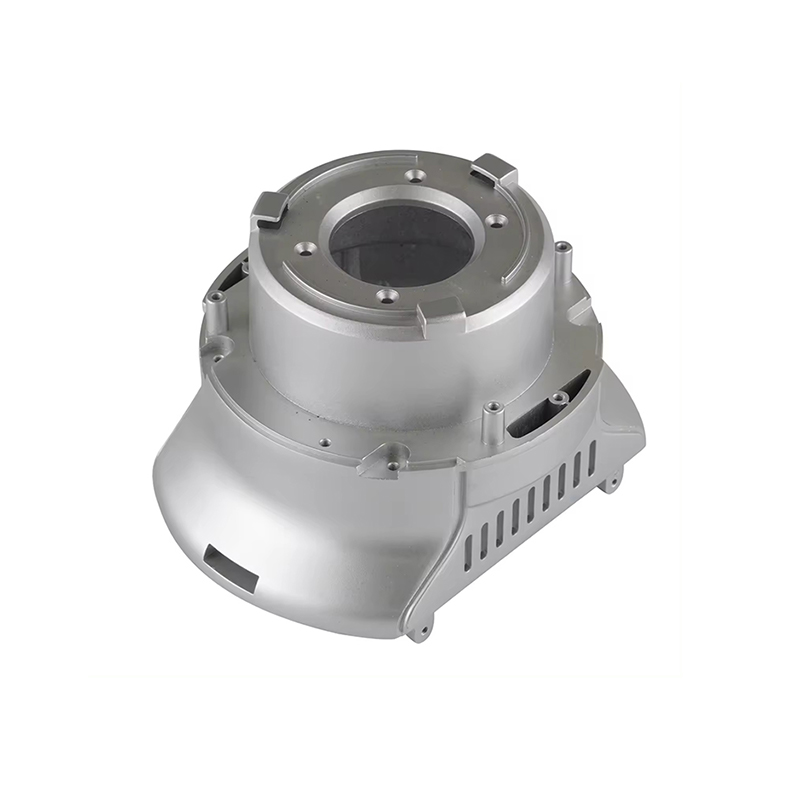 Aluminum Die-Cast Pump Housings and Hydraulic Valve BodiesThis product line covers fluid-control components for petrochemical, water treatment, construction, and energy sectors, with pressure ratings up to 35MPa and corrosion-resistant alloys, making it a key choice for demanding industrial systems.View Product →
Why Choose Ningbo Chengen Machinery for Aluminum Casting
Choosing the right manufacturing partner matters as much as choosing the right process. At Ningbo Chengen Machinery, we have combined casting and machining under one roof since 2008, with a modern 12,000-square-meter production base that supports pattern design, casting, CNC finishing, surface treatment, and quality inspection. Our one-stop approach reduces the friction of coordinating multiple suppliers and keeps every step of your project under the same quality system. Before production begins, our engineers review the drawing, challenge the assumptions that drive cost, and recommend the most economical casting route that still meets your critical tolerances. Learn more about our company, our equipment, and our engineering philosophy on our About page.
Our team works with aluminum alloys every day for automotive, industrial, and structural applications. In the automotive field, for example, we supply aluminum cast components for powertrain systems, combining pressure-tight bodies with precisely machined mounting faces to meet the dimensional requirements of modern engine compartments.
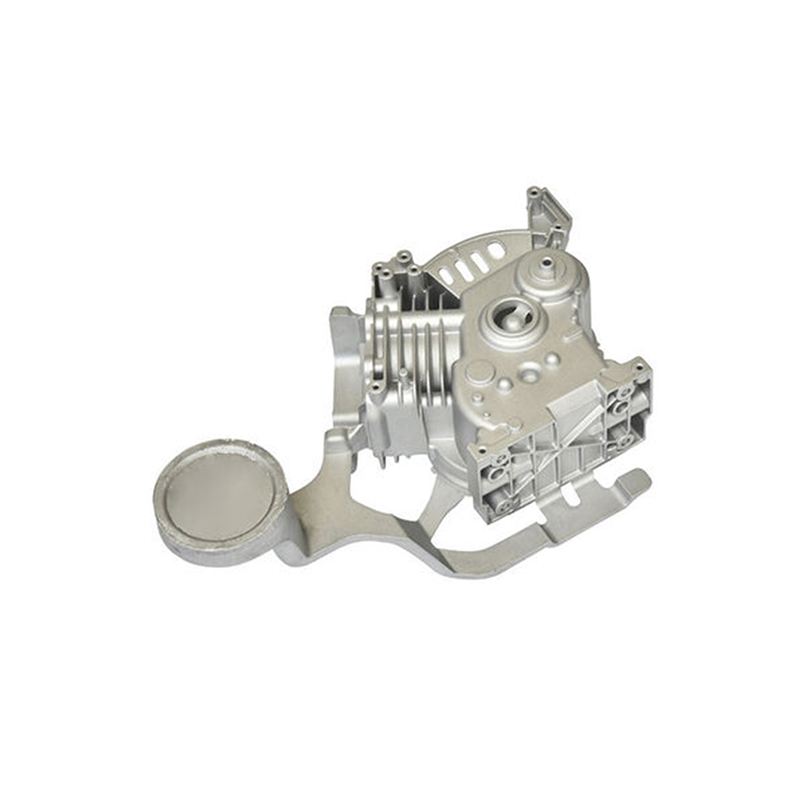 Aluminum Die-Cast Powertrain ComponentsThese components support passenger, commercial, and new energy vehicles, using high-pressure die casting with vacuum assist and heat treatment to achieve lightweight, high-strength parts like transmission cases, cylinder heads, and oil pans.View Product →
Quality is a constant focus at every stage of production. Our facility operates under documented quality management systems, and each shipment is checked for dimensional conformity, material specification, and surface condition before it leaves the factory. This is the level of control that makes a one-stop partner reliable for parts that must perform in demanding environments.
Aluminum investment casting is a proven route to lightweight, high-integrity metal parts, and it becomes even more powerful when the foundry work is paired with precision machining in the same production flow. Whether you are developing a new product, optimizing an existing component, or bringing a legacy part back into production, Ningbo Chengen Machinery is ready to help you evaluate the options and deliver a solution that meets your specification. Contact our engineering team with your drawings and requirements to receive a prompt, detailed quotation.