English
 Español
 русский
Content
Few material questions come up as often as aluminum vs stainless steel. A drawing arrives with a note that says “lightweight, corrosion resistant, and strong,” and the real decision begins. Both materials can look similar after finishing, both are common in custom manufacturing, and both can be the right answer depending on how the part will be used. The differences show up in weight, stiffness, corrosion behavior, machining time, casting method, and total cost.
In our daily work at Chengen Machinery, we see this decision from the shop-floor side. Some parts arrive as aluminum die castings that need clean edges and tight mounting points. Others begin as stainless steel investment castings and then move through CNC machining, drilling, and surface finishing. The aluminum stainless steel question is rarely settled by a single property. It is settled by the part, the environment, and the volume.
What Aluminum and Stainless Steel Really Are
Aluminum is a lightweight base metal. In manufacturing, it is rarely used in pure form. Alloys such as 6061, 7075, A380, and ADC12 are common because they balance strength, castability, machining behavior, and corrosion resistance. Aluminum forms a thin oxide layer naturally, and anodizing can build that layer into a more durable surface. The metal is soft compared with steel, but its strength-to-weight ratio is excellent.
Stainless steel is an iron-based alloy with chromium as the key alloying element. The chromium creates a passive oxide layer that protects the surface. Grades such as 304, 316, 17-4 PH, and duplex stainless steels cover a wide range of strength and corrosion needs. Stainless steel is heavier and generally stronger than aluminum, but it is not automatically “better” for every part. It is simply a different set of trade-offs.
Why the alloy grade matters more than the headline material
A vague request for “aluminum” or “stainless” can lead to the wrong grade. A 6061 aluminum bracket is not the same as an A380 die-cast housing. A 304 stainless steel handle is not the same as a 316 marine fitting or a 17-4 PH high-strength shaft. The grade affects strength, weldability, corrosion resistance, polishing, and machining cost. For custom parts, the grade should be chosen with the process and the environment in mind.
Weight, Strength, and the Design Trade-Off
Weight is usually the first difference people notice. Aluminum weighs roughly one-third as much as stainless steel for the same volume. That matters in handheld equipment, automotive components, moving assemblies, and anything that must be lifted or carried. The lower weight can also reduce shipping cost and make installation easier.
Strength is more nuanced. Stainless steel generally has higher tensile strength and better stiffness, which helps when a part must resist bending or carry a heavy load. Aluminum can still be strong enough for many structural parts, especially when the shape is designed around its properties. A well-designed aluminum casting can replace a heavier steel assembly, but it needs thicker sections, ribs, or a different geometry. Simply swapping one material for the other without revisiting the design is rarely a safe shortcut.
| Property | Aluminum | Stainless Steel |
|---|---|---|
| Density | About 2.7 g/cm3 | About 7.9 g/cm3 |
| Typical tensile strength | Moderate to high; alloy dependent | Moderate to very high; grade dependent |
| Corrosion resistance | Good in many atmospheres; anodizing helps | Good to excellent; 316 for chlorides |
| Thermal conductivity | High | Low |
| Machinability | Generally easier and faster | More demanding; work hardening possible |
| Relative material cost | Usually lower per kilogram | Usually higher per kilogram |
Corrosion Behavior in the Real World
Aluminum does not rust in the way steel does, but that does not make it immune to corrosion. Its natural oxide film is stable in many outdoor and indoor environments. However, chlorides, strong acids, and some alkaline conditions can attack aluminum. In coastal areas or applications with road salt, a suitable alloy and a protective finish such as anodizing or powder coating are often necessary.
Stainless steel relies on its chromium-rich passive layer. Grade 304 performs well in many general environments, while 316 adds molybdenum for better resistance to chlorides and marine exposure. Stainless steel can still suffer pitting, crevice corrosion, or staining if the surface is contaminated or the wrong grade is used. Good design details, such as drainage and avoiding tight crevices, matter as much as the material name.
One point often missed is galvanic corrosion. When aluminum and stainless steel are joined and exposed to moisture, the aluminum can become the anode and corrode faster. Insulating washers, coatings, or a compatible joint design can reduce the risk. This is one reason a material decision should consider the full assembly, not just the individual part.
Machining, Casting, and Forming: Where the Choice Becomes Practical
On the manufacturing side, aluminum and stainless steel ask different things from the process. Aluminum is generally softer, cuts faster, and allows higher machining speeds. It can be die cast into thin-walled, complex shapes at high volume, which is why aluminum is common for housings, brackets, covers, and pump bodies. The lower melting point also helps tooling life, although aluminum can be gummy if feeds and speeds are not controlled.
For industrial fluid systems, aluminum die-cast pump housings and hydraulic valve bodies are a practical example. The process can form the outer shape close to final size, and CNC machining then brings critical bores and mounting faces into tolerance. Our team produces these kinds of aluminum die-cast parts for equipment builders who need repeatable geometry and a clean surface.
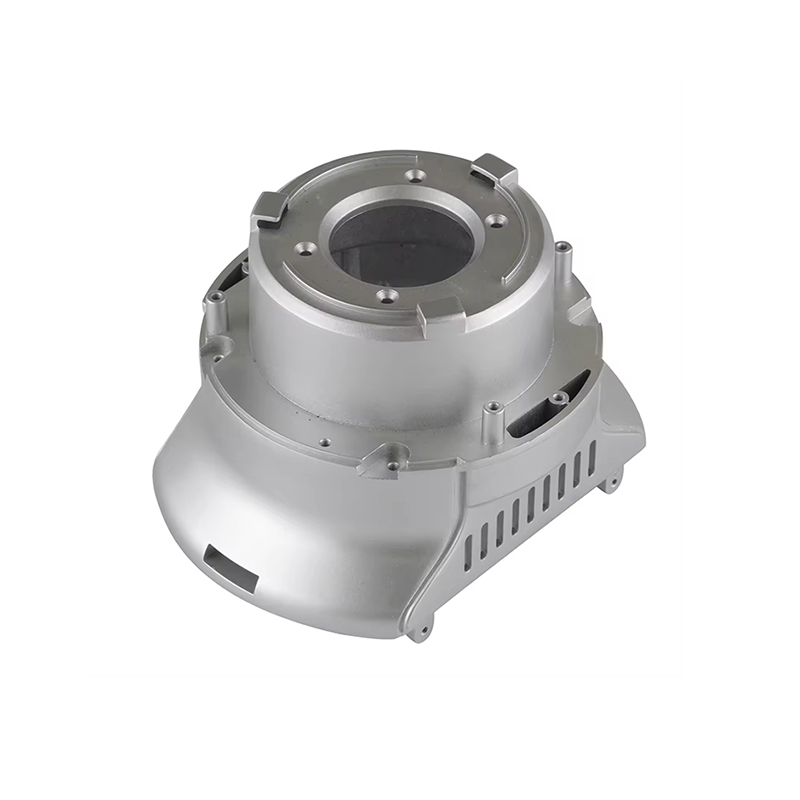 Aluminum Die-Cast Pump Housings and Hydraulic Valve BodiesFor industrial fluid systems, these aluminum die-cast housings and valve bodies combine near-final forming with CNC machining for repeatable bores and mounting faces.View Product →
Small and medium motor housings are another good fit for aluminum die casting. The part usually needs thin walls, cooling features, and accurate mounting points. Aluminum keeps the weight down while the casting process handles the complex external form. After machining, the housing can be coated or left with a suitable as-cast finish depending on the environment.
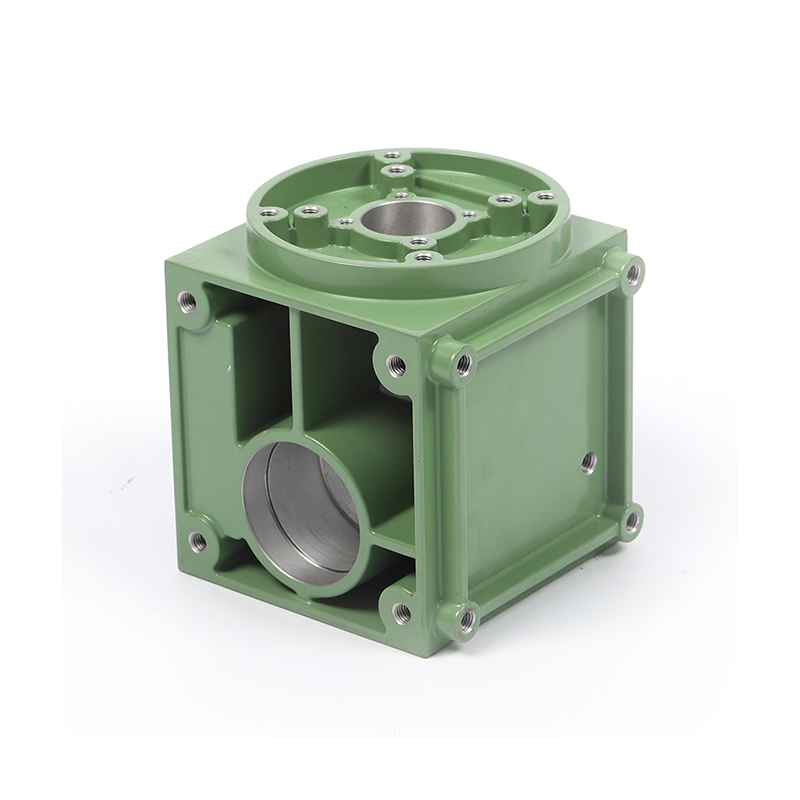 Aluminum Die-Cast Small and Medium Motor HousingsThese housings suit small and medium motors where thin walls, cooling features, and accurate mounting points matter, with aluminum helping control weight.View Product →
Stainless steel behaves differently. It is often chosen for investment casting when the part needs high strength, better wear resistance, or a surface that must stand up to food, marine, or public-transit environments. Stainless steel is more demanding to machine because it can work-harden, so rigid setups, sharp tooling, and controlled coolant are important. The payoff is a part that can combine structural strength with a durable, easy-to-clean surface.
For rail transit and public transport components, stainless steel investment castings can provide the strength and finish needed for interior fittings and structural details. These parts often go through machining, polishing, and assembly checks before delivery. If you would like to see how casting, machining, and fabrication are organized under one roof, our factory overview shows the working flow.
 Stainless Steel Precision Cast Rail Transit PartsFor rail transit and public transport fittings, these stainless steel investment castings provide strength and finish for handrails and connectors before machining and assembly checks.View Product →
Cost Is More Than the Price per Kilogram
Aluminum usually costs less per kilogram than stainless steel, but that is only the starting point. The total cost includes the raw material, casting or forging yield, machining time, tooling, finishing, scrap rate, and inspection. Aluminum cuts faster, which can lower machining cost. Stainless steel may take longer to machine and may require more careful tool management, but it can also reduce the need for coating or replacement in harsh environments.
Volume changes the picture again. Die casting makes sense for higher-volume aluminum parts because the tooling cost is spread across many pieces. Investment casting can be economical for complex stainless steel parts at lower or medium volumes, especially when the shape would be expensive to machine from solid stock. A fair comparison should use the finished part, not just the material price.
When to Choose Each Material
Aluminum is often the better choice when:
- Weight reduction is a primary design goal.
- The part needs good thermal conductivity, such as a heat sink or housing.
- The production volume supports die casting or a machined aluminum design.
- The environment is moderate and a suitable finish can be applied.
- The part can be designed with thicker sections or ribs to compensate for lower stiffness.
Stainless steel is often the better choice when:
- The part must resist corrosion in marine, food, medical, or washdown environments.
- Higher strength, stiffness, or wear resistance is needed.
- The application involves elevated temperatures or repeated cleaning.
- The visible surface must hold a durable brushed or polished finish.
- The part will be used in public transport, architectural hardware, or sanitary equipment.
If you are still weighing the two, the most useful next step is to share the drawing, the operating environment, and the expected volume. Our team can review the material, suggest a process route, and point out where the cost or risk sits. You can send us your drawings and we will respond with practical questions rather than a one-line quote.
A Short Selection Checklist
- Define the load and stiffness the part must carry, not just the material name.
- List the actual environment: indoor, outdoor, coastal, washdown, chemical, or high temperature.
- Decide whether weight, corrosion, strength, or cost is the fixed constraint.
- Check the grade, not only the base material.
- Consider the joining method and the risk of galvanic corrosion.
- Match the process to the volume: die casting, investment casting, forging, or machining from stock.
- Include finishing and inspection in the cost comparison.
Aluminum and stainless steel are both capable materials. The better choice is the one that fits the part, the process, and the life of the product. When the decision is close, a short manufacturing review is usually cheaper than a late design change.