English
 Español
 русский
Content
- 1 What Is Aluminum Heat Treatment?
- 2 The Main Types of Aluminum Heat Treatment
- 3 Understanding Aluminum Temper Designations
- 4 Why Heat Treatment Matters for Die-Cast Aluminum Parts
- 5 Choosing the Right Heat Treatment for Your Cast Components
- 6 Partnering With a Manufacturer That Understands Aluminum Heat Treatment
Aluminum heat treatment is one of the most important steps in producing high-performance cast components. For manufacturers of aluminum die castings, the right thermal process transforms a raw casting into a part with predictable strength, dimensional stability, and service life. Whether you are designing powertrain housings, pump bodies, or structural brackets, understanding how aluminum responds to heat is essential for specifying the correct material condition.
What Is Aluminum Heat Treatment?
Aluminum heat treatment refers to a series of controlled heating and cooling operations applied to aluminum alloys to modify their mechanical properties. Unlike steel, where heat treatment is often used to harden a surface, aluminum alloys are typically treated to improve strength, relieve internal stresses, or stabilize dimensions.
Not all aluminum alloys respond to heat treatment. Alloys in the 2xxx, 6xxx, and 7xxx series, as well as certain casting alloys such as A356 and A380, contain elements like copper, magnesium, silicon, and zinc that enable precipitation hardening. The treatment takes advantage of the fact that these elements become more soluble in aluminum at elevated temperatures and can be locked in a supersaturated state through rapid cooling. Careful aging then allows fine particles to precipitate, which strengthens the material.
The Main Types of Aluminum Heat Treatment
Five core processes cover most aluminum heat treatment requirements. Each serves a distinct purpose, and the choice depends on the alloy and the desired end properties.
Annealing
Annealing is a softening process. The casting is heated to a moderate temperature, typically around 340°C to 410°C (650°F to 770°F), and held long enough to allow recovery and recrystallization. The material is then cooled slowly in the furnace. Annealing is often used before further forming or machining because it reduces hardness and improves ductility. It can also be applied after excessive cold work to prevent cracking.
Homogenizing
Homogenizing is performed on freshly cast ingots or billets. During solidification, alloying elements tend to segregate, creating uneven composition within the structure. A homogenizing treatment holds the material at a high temperature for several hours to diffuse these elements and create a uniform microstructure. This improves subsequent processing behavior and the final mechanical properties of the part.
Solution Heat Treatment
The goal of solution heat treatment is to dissolve soluble alloying elements into solid solution. The part is heated to a temperature range of approximately 480°C to 540°C (900°F to 1000°F), depending on the alloy, and held at that temperature to allow complete dissolution. This step requires precise temperature control because overheating can cause localized melting and ruin the part. The recommended ranges are narrow, typically within ±6°C.
Rapid Quenching
After solution heat treatment, the part must be quenched quickly to retain the dissolved elements in a supersaturated solid solution. For aluminum, water at room temperature or slightly elevated temperature is the most common quench medium. The transfer time from furnace to quench tank must be minimal, often under 10 to 15 seconds, to prevent premature precipitation. Quenching is critical for mechanical properties, and uniform quenching also matters to minimize residual stresses and distortion.
Natural and Artificial Aging
Aging is where the actual strengthening occurs. During natural aging, the part is stored at room temperature, and hardening develops over days or weeks. Artificial aging accelerates this at elevated temperatures, typically 120°C to 190°C (250°F to 375°F), for a controlled duration. The precipitates that form hinder dislocation movement, significantly increasing yield strength and hardness.
Understanding Aluminum Temper Designations
Temper designations indicate the processing state of an aluminum alloy and are added after the alloy designation. For cast components, the most common tempers are T4, T5, T6, and T7. Knowing what each means helps you specify the right condition for your application.
| Temper | Process | Typical Application |
|---|---|---|
| T4 | Solution heat treated and naturally aged | Parts requiring good ductility before further forming |
| T5 | Cooled from casting and artificially aged | Complex castings where distortion risk must be minimized |
| T6 | Solution heat treated and artificially aged | High-strength components such as powertrain parts |
| T7 | Solution heat treated and overaged | Parts needing improved stress corrosion resistance |
The difference between T5 and T6 is important. T5 skips the solution heat treatment step, which reduces distortion risk and cost but also caps the achievable strength. T6 delivers the highest mechanical properties and is widely used in automotive and industrial applications where load capacity is critical.
Why Heat Treatment Matters for Die-Cast Aluminum Parts
Die casting produces high-volume, dimensionally accurate parts, but as-cast properties are not always sufficient for demanding applications. Heat treatment can significantly enhance the strength and consistency of aluminum die castings, which is why many engineered components undergo T6 or T5 processing before machining.
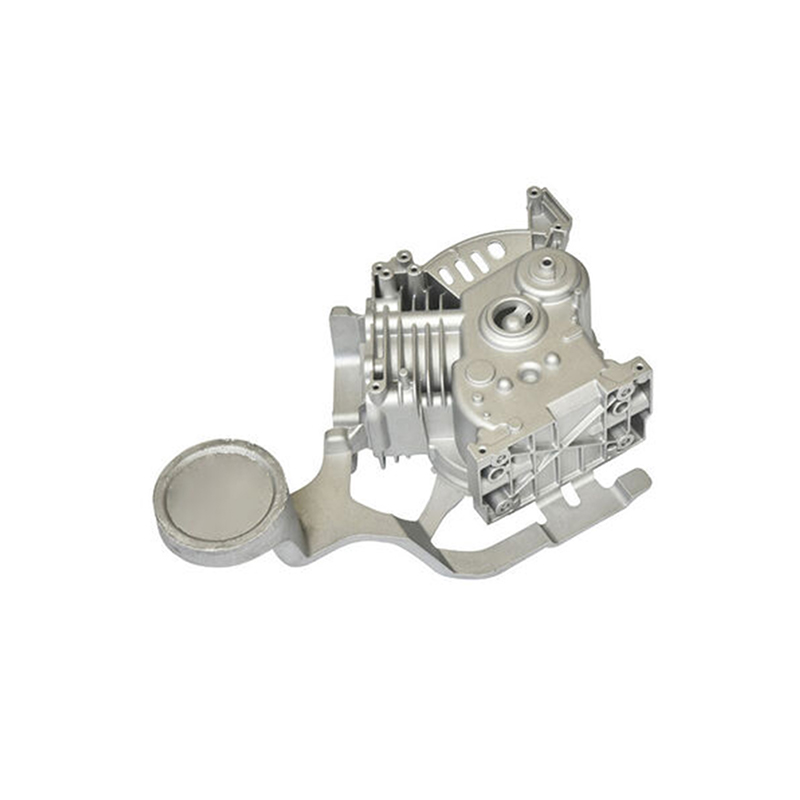 Aluminum Die Cast Powertrain Components for Automotive and EV ApplicationsThese high-pressure die castings deliver lightweight yet fatigue-resistant housings for engines, transmissions, and EV drive systems, making them ideal for heat-treated structural parts.View Product →
In the automotive sector, components such as powertrain housings and transmission parts must endure cyclic loads, vibration, and temperature changes over thousands of operating hours. Heat treatment gives these parts the fatigue strength they need while allowing designers to reduce wall thickness for weight savings. For a deeper dive into how these requirements translate into process parameters, see our aluminum casting heat treatment guide.
 Heat-Treated Die Cast Pump Housings and Hydraulic Valve BodiesEngineered for continuous pressure and dimensional stability, these aluminum components undergo vacuum casting and precision heat treatment to ensure reliable sealing and long service life.View Product →
Industrial pump housings and hydraulic valve bodies face a different challenge. These parts operate under continuous pressure and need stable dimensions over long service lives. A properly applied heat treatment relieves internal stresses, improves resistance to deformation, and helps ensure reliable sealing in fluid power systems.
Heat treatment also affects machinability. Most die castings require secondary CNC operations, and a controlled thermal cycle can mean the difference between stable, predictable machining and costly scrap. This is why we treat heat treatment as an integrated part of the manufacturing route rather than an optional extra.
Choosing the Right Heat Treatment for Your Cast Components
Selecting a heat treatment begins with the alloy and the service requirements. If the part must withstand high mechanical loads, a T6 temper is usually the right choice. If dimensional stability and cost control matter more, T5 may be sufficient. For parts that are welded or formed after casting, annealing can provide the ductility needed for further processing.
Distortion is a real concern. Thin-walled aluminum die castings can warp during quenching, especially when wall thickness varies. This risk can be managed through part design, such as adding ribs and maintaining uniform sections, and by working with a foundry that understands how to control quench rates and fixture parts properly.
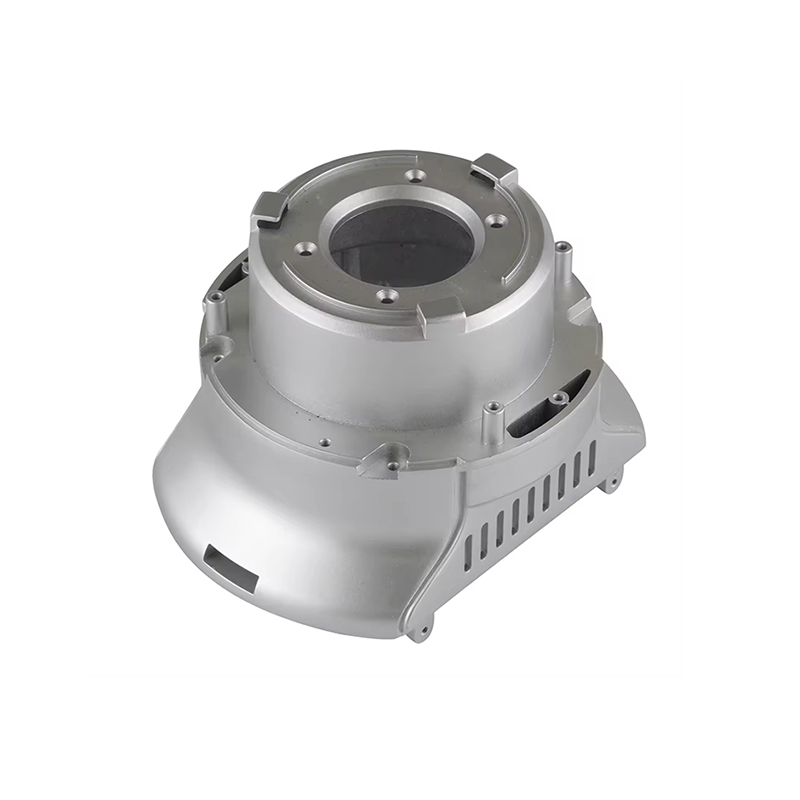
At Ningbo Chengen Machinery, we apply years of experience in casting and machining to help customers select the right heat treatment for each project. From precision motor housings that require stable bore dimensions to structural brackets that demand consistent strength, our team evaluates every part on its own terms before committing to a process.
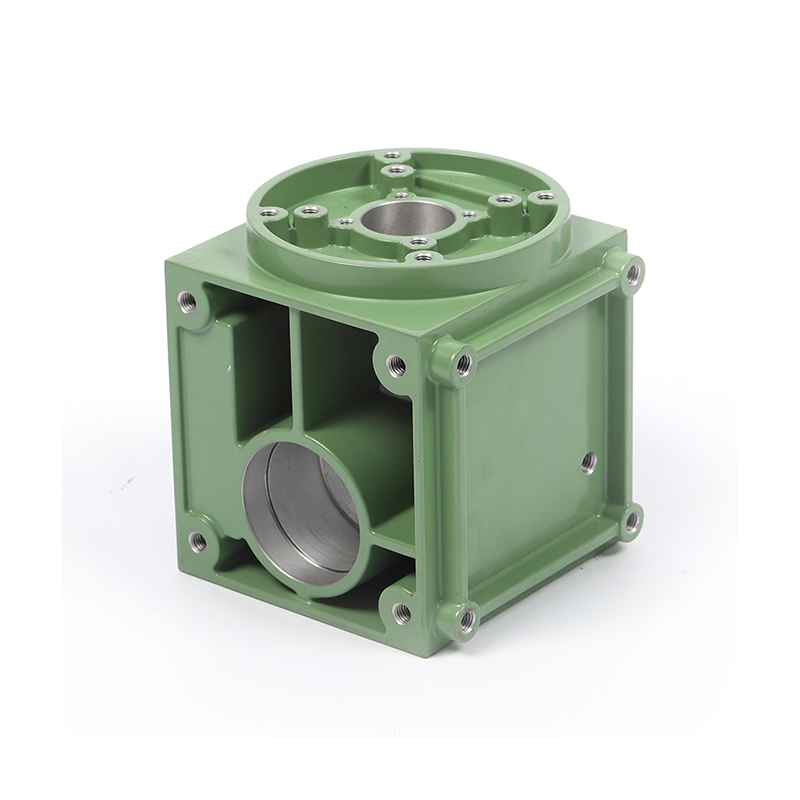 Precision Die Cast Motor Housings for Diverse Power RatingsOffering tight tolerances and consistent properties, these motor housings benefit from integrated casting, machining, and heat treatment, ensuring stable bores and dependable performance.View Product →
Partnering With a Manufacturer That Understands Aluminum Heat Treatment
Heat treatment sits between casting and finished machining. A manufacturer that controls all three stages without gaps can deliver parts with tighter tolerances and more predictable properties. Our integrated facility in Ningbo combines aluminum die casting, CNC machining, and quality inspection, so heat treatment is never an afterthought.
When you evaluate suppliers for your next aluminum casting project, ask about their temperature control, quenching procedures, and how they document process parameters. The answers will tell you whether your parts will perform reliably in the field or fail prematurely.
If you are working on a new design or reviewing an existing one, our engineering team is ready to provide input on alloy selection, temper choices, and manufacturability. Contact us to discuss your requirements.