English
 Español
 русский
Content
- 1 Why Aluminum Die Casting Dominates Automotive Parts Production
- 2 How Aluminum Die Casting Works
- 3 Typical Automotive Applications for Die Cast Aluminum Parts
- 4 Why Aluminum Casting Heat Treatment Matters
- 5 Heat Treatment Comparison for Die Cast Aluminum Parts
- 6 Quality Control Checks for Automotive Die Casting Parts
- 7 Design Considerations for Manufacturability
Why Aluminum Die Casting Dominates Automotive Parts Production
Aluminum die casting is the leading manufacturing process for automotive structural and powertrain components because it produces high-strength, dimensionally precise parts at low unit cost when volumes exceed roughly 10,000 units. A properly designed die casting automotive part combines the light weight of aluminum — about one-third the density of steel — with mechanical properties that, after correct heat treatment, meet or exceed the demands of transmission housings, engine blocks, and structural chassis components.
This article explains how aluminum die casting parts are produced, why heat treatment is essential to their performance, and what buyers and engineers should evaluate when sourcing die casting automotive parts for production programs.
How Aluminum Die Casting Works
In high-pressure die casting, molten aluminum is injected into a hardened steel mold at pressures typically between 1,500 and 25,000 psi, filling the cavity in under 100 milliseconds. This speed allows thin walls — as low as 1.5 mm in some automotive applications — to be filled completely before the metal solidifies, enabling lightweight designs that would be impractical with sand or gravity casting.
Common Aluminum Alloys Used
Most automotive die casting parts use A380 or A383 alloy for general structural and housing components due to their good fluidity and castability, while newer Silafont-36 and Aural-2 alloys are increasingly specified for structural chassis parts because they support heat treatment without the porosity issues common in older high-silicon alloys.
Typical Automotive Applications for Die Cast Aluminum Parts
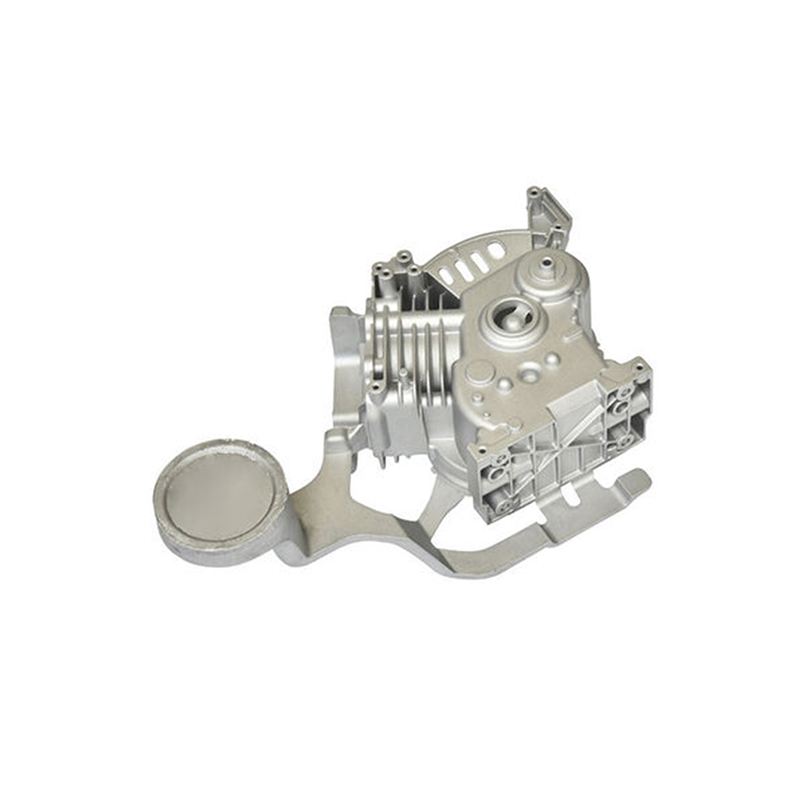
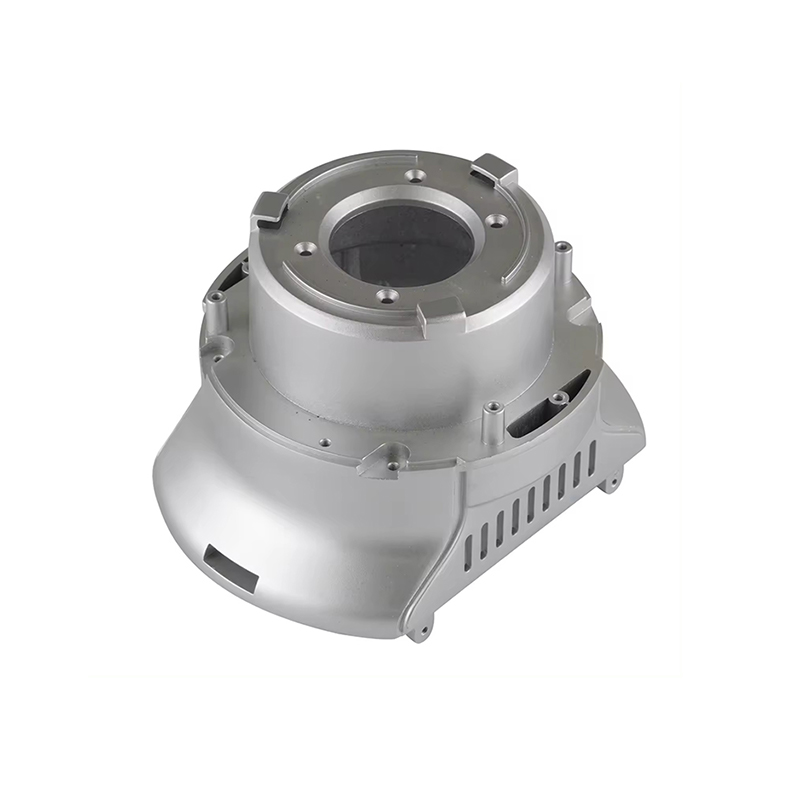
- Transmission and engine housings: Complex internal geometry cast in a single shot, eliminating multi-part assemblies
- Structural chassis components: Shock towers and subframes, particularly in electric vehicles using large "gigacasting" parts
- Electric motor housings: Precision thermal management surfaces for battery and motor cooling
- Brackets and mounts: Engine mounts, steering brackets, and suspension components requiring high fatigue strength
- Air intake and cooling components: Intake manifolds and pump housings benefiting from aluminum's corrosion resistance
Why Aluminum Casting Heat Treatment Matters
As-cast aluminum parts often fall short of the strength, hardness, or dimensional stability required for structural automotive applications. Heat treatment can increase tensile strength by 30-50% and significantly improve elongation, making it a critical step rather than an optional finishing process for load-bearing die casting parts.
T5 and T6 Heat Treatment Explained
T5 treatment involves artificial aging directly from the casting temperature and is used for moderate strength gains without full solution treatment. T6 treatment — solution heat treating followed by artificial aging — produces the highest strength and is standard for structural parts, though it requires vacuum die casting or low-porosity alloys to avoid blistering during the high-temperature solution stage.
Stress Relief and Dimensional Stability
Even parts that don't require strength improvements often undergo a stress-relief anneal at 200-260°C to reduce internal residual stress from rapid solidification, which prevents warping during subsequent machining — a common requirement for precision-bore transmission housings.
Heat Treatment Comparison for Die Cast Aluminum Parts
| Treatment | Process | Typical Tensile Strength | Common Use |
|---|---|---|---|
| As-Cast (F) | No treatment | 160-230 MPa | Non-structural brackets, covers |
| T5 | Artificial aging only | 230-260 MPa | Housings with moderate load |
| T6 | Solution treat + aging | 290-330 MPa | Structural chassis parts |
| Stress Relief | Low-temp anneal | Unchanged | Parts requiring precision machining |
Quality Control Checks for Automotive Die Casting Parts
Automotive-grade die casting parts typically undergo several inspection stages before approval for production use:
- X-ray or CT scanning to detect internal porosity, which is critical for pressure-sealed housings
- Dimensional inspection using CMM (coordinate measuring machines) against tolerances typically within ±0.1 mm on critical features
- Hardness testing after heat treatment to confirm target mechanical properties were achieved
- Leak testing for parts sealing fluids, such as transmission and engine housings
- Surface finish inspection prior to machining, coating, or painting operations
Design Considerations for Manufacturability
Wall thickness should remain as uniform as possible, generally between 2 mm and 4 mm, to avoid shrinkage porosity and reduce cycle time. Draft angles of at least 1-2 degrees on vertical surfaces are necessary to allow clean ejection from the die, and generous fillets at internal corners reduce stress concentration that can lead to cracking under vibration loads common in automotive service.
Engineers working with a die casting supplier should also plan for post-casting operations early in the design phase — machining allowances, heat treatment distortion, and surface treatment requirements all affect final tolerances and should be specified before tooling is cut, since die modifications after tooling is complete are costly and can add several weeks to a program timeline.