English
 Español
 русский
Content
An excavator bucket linkage does not fail quietly. When a steel component gives way under shock loading, the result is downtime, repair cost, and site safety risk. That is why hot steel forging remains the default process for many load-bearing and safety-critical parts in industrial vehicles. Hot forging produces a dense, grain-oriented structure that gives steel components superior strength and fatigue life compared with cast or simply machined alternatives.
What Is Hot Steel Forging?
Hot forging is the mechanical deformation of steel at temperatures above its recrystallization point, typically between 950°C and 1,250°C. At these temperatures, the steel becomes soft enough to flow into die cavities under pressure, while repeated recrystallization refines the grain structure. Unlike cold forging, which requires high press forces and limits deformation, hot forging allows larger and more complex shapes to be formed in a single or multiple operations.
The process starts with a heated billet or bar. The heated metal is placed in an open die or impression die and shaped by a hammer, press, or upsetting machine. After forging, parts cool in a controlled manner to avoid distortion or cracking. Scale and decarburization form on the surface, which is why most hot forged parts require a subsequent machining or surface treatment step to reach final tolerances.
Why Hot Forging Suits Industrial Vehicle Components
Industrial vehicles such as excavators, wheel loaders, heavy trucks, and agricultural machines operate under cyclic loads, impact, and abrasive conditions. A hot forged part offers a continuous grain flow that follows the component contour, which improves toughness and resistance to crack growth. Compared with castings, forgings are far less likely to contain internal porosity or shrinkage voids. Compared with cold forging, hot forging can handle larger sections, deeper cavities, and higher alloy content without the risk of cracking during deformation.
These advantages translate directly into longer service life and fewer field failures. For a component that connects a hydraulic cylinder to a boom, or a steering system to a wheel axle, the cost of a single premature failure is high enough to justify the slightly higher unit price of a forged part.
Hot Forging vs. Cold Forging vs. Casting
The table below summarizes the key differences that influence material selection for industrial vehicle applications.
| Property | Hot Forging | Cold Forging | Casting |
|---|---|---|---|
| Deformation temperature | 950–1,250°C | Near room temperature | Molten metal |
| Typical part size | Medium to large | Small to medium | Small to very large |
| Grain structure | Refined and directional | Fine but limited flow | As-cast; may have porosity |
| Dimensional accuracy | Good with machining | Excellent | Good |
| Initial tooling cost | Moderate to high | High | Low to moderate |
| Production volume | Medium to high | High | Low to high |
Hot forging is not always the optimal choice. For very high-volume, small, simple parts, cold forging may offer better dimensional consistency and lower energy costs. For low-volume prototype work, casting can be more economical. But when the part must survive severe loading and the volume justifies die investment, hot forging is the process that balances mechanical performance and manufacturability.
Typical Hot Forged Components in Industrial Vehicles
Steering knuckles, axle beams, gear blanks, torsion bars, and hydraulic cylinder trunnions are common examples. For on-road trucks and off-road equipment, these components often start as hot forged auto parts for powertrain and chassis applications because they must absorb repeated shock without developing cracks.
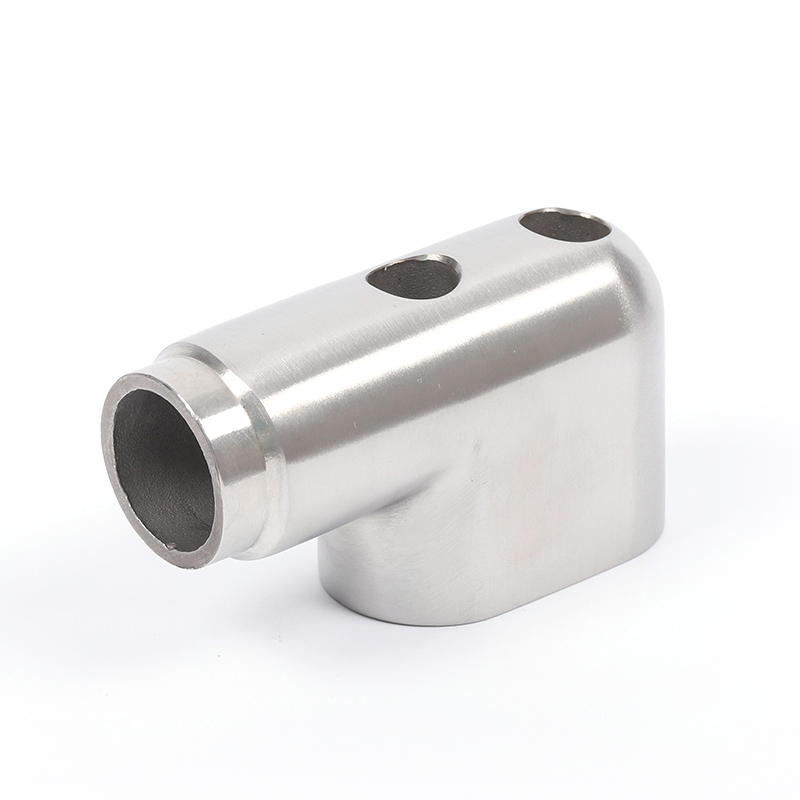
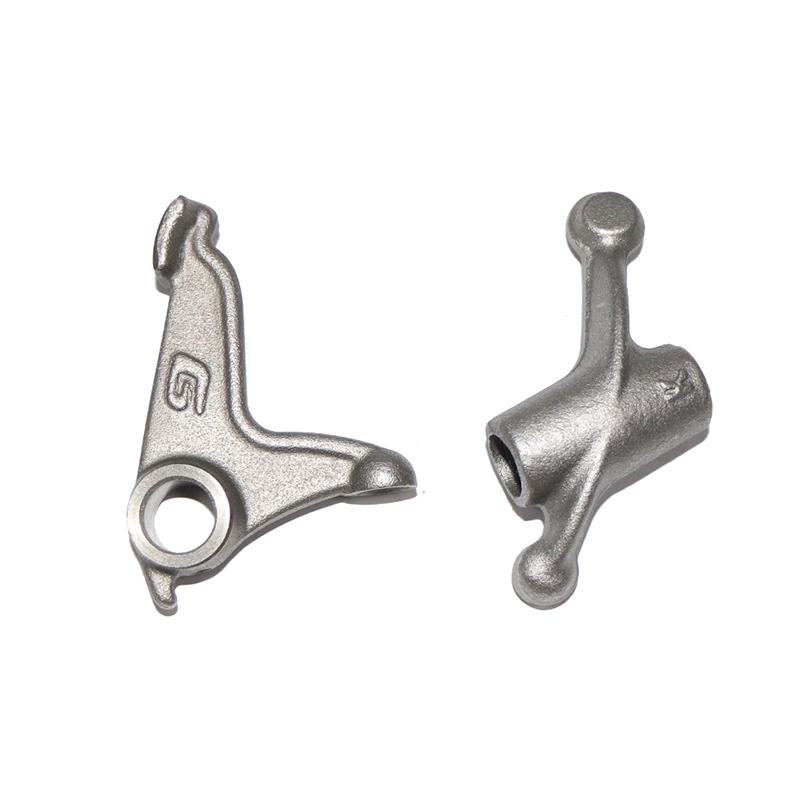 Custom Hot Forged Auto Parts Suppliers, Factory - Ningbo Chengen Machinery Co., Ningbo Chengen Machinery Co., Ltd. is China custom Hot Forged Auto Parts suppliers and factory,Product OverviewCore Process: Precision Ho...View Product →
Construction machinery brings additional examples: bucket teeth adapters, boom links, track chain parts, and pivot pins. These parts see abrasive wear and high local stresses. Hot forging gives them a continuous fiber flow that follows the load path, which is difficult to achieve with casting alone. A forged microstructure also responds predictably to heat treatment, making it easier to hit target hardness and tensile strength specifications.
Steel Grades and Process Parameters That Matter
Material selection determines how well a forged part survives fatigue and impact. Medium-carbon steels such as 1045 are popular for general structural parts. Alloy steels like 4140 and 4340 add hardenability and are used for shafts, gears, and heavy-duty suspension parts. Carburizing grades such as 8620 give a hard, wear-resistant surface with a tough core, which is ideal for gear blanks and pinions.
The forging temperature itself must be matched to the steel grade. Low-alloy steels are commonly forged between 1,050°C and 1,200°C, while carbon steels may be forged near the upper range. Excessive temperature increases scale formation, decarburization, and grain growth; too low a temperature creates die overload and cracks. Reputable forging suppliers monitor billet temperature in real time and use pyrometers or thermal imaging to keep the process within a narrow band.
Die Design and Secondary Finishing
Hot forging dies require adequate draft angles, large fillet radii, and proper parting line placement to ensure metal flow and eject part. After forging, the component usually goes through normalizing or quench-and-temper treatment. Most hot forged parts also need CNC machining to achieve final bores, faces, and threaded holes. A supplier that controls both forging and machining in one facility reduces the risk of dimensional error and shortens the logistics chain.
What to Look for in a Hot Forging Supplier
Choosing a forging partner is different from ordering machined blanks from a catalog. You need a supplier that can manage heat treatment, scale removal, and secondary machining. A capable supplier should demonstrate experience with hot forged industrial equipment and heavy machinery parts, where large cross-sections and demanding loads are common.
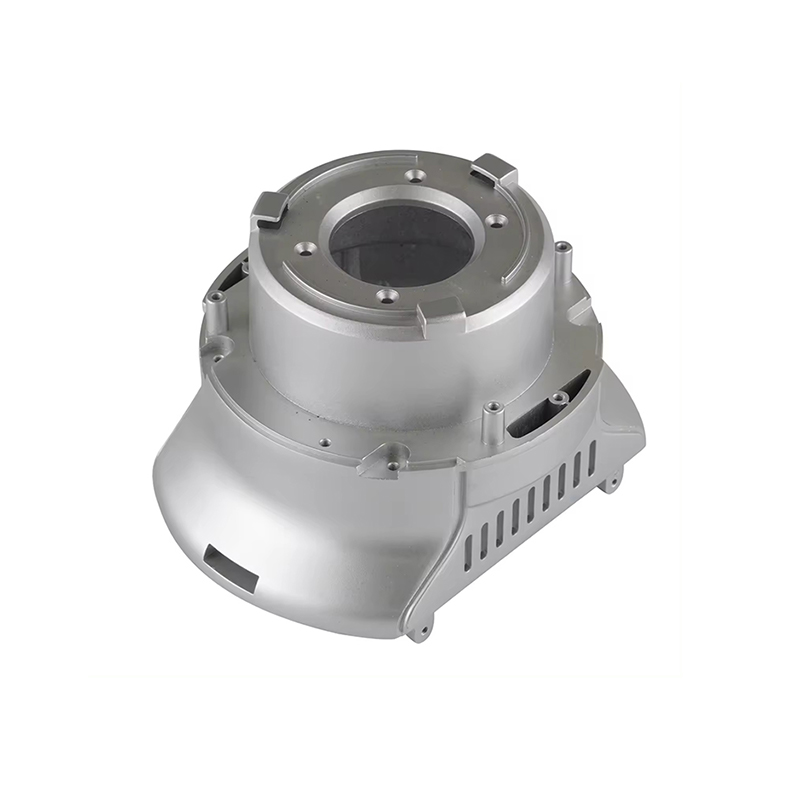
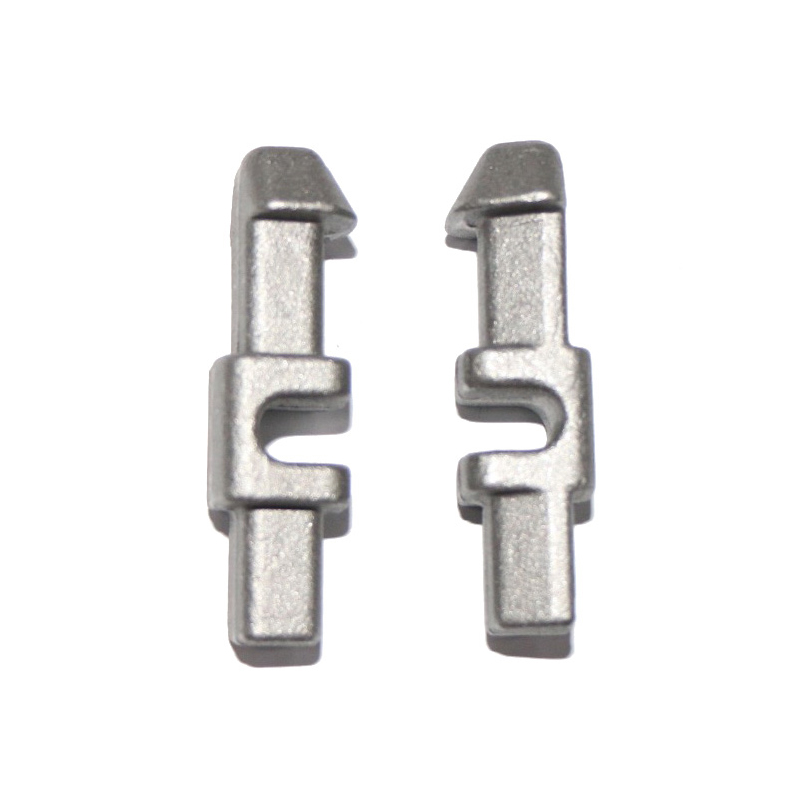 Custom Hot Forged Industrial Equipment And Heavy Machinery Suppliers, Factory - Ningbo Chengen Machinery Co., Ltd. is China custom Hot Forged Industrial Equipment And Heavy Machinery suppliers and factory,Product Over...View Product →
Evaluate the manufacturer's quality system and equipment. A clean, well-organized factory floor is a good sign. Ask how they handle die maintenance, first article inspection, and material traceability. Since forged parts often require precise final dimensions, check whether the supplier has in-house CNC machining. That eliminates the need to coordinate between a forge shop and a machine shop.
It is also useful to assess how much engineering support the supplier offers. A team that can review your drawing for forging feasibility, suggest draft angle adjustments, or help select a steel grade is more valuable than one that simply runs a press. The initial consultation phase often reveals whether the supplier treats your project as a long-term partnership or a one-off order.
Practical Steps for Working with a Forging Partner
Start with a complete drawing and a clear performance requirement. Without a defined load case or target hardness, the forging supplier cannot make meaningful decisions about material or process. Bring your anticipated annual volume as well, because die cost amortization affects piece price and part design.
- Define the part geometry and final tolerances.
- Specify the steel grade and heat treatment.
- Discuss forging design requirements such as draft angles, radii, and parting line location.
- Request a first article inspection report before production.
Before sending drawings, review the full range of hot forged parts to confirm the process matches your geometry and volume. If you need help with material selection or forging design, contact the engineering team directly. A good supplier will give you a realistic quote, explain what they can and cannot do, and suggest a testing plan for new applications.
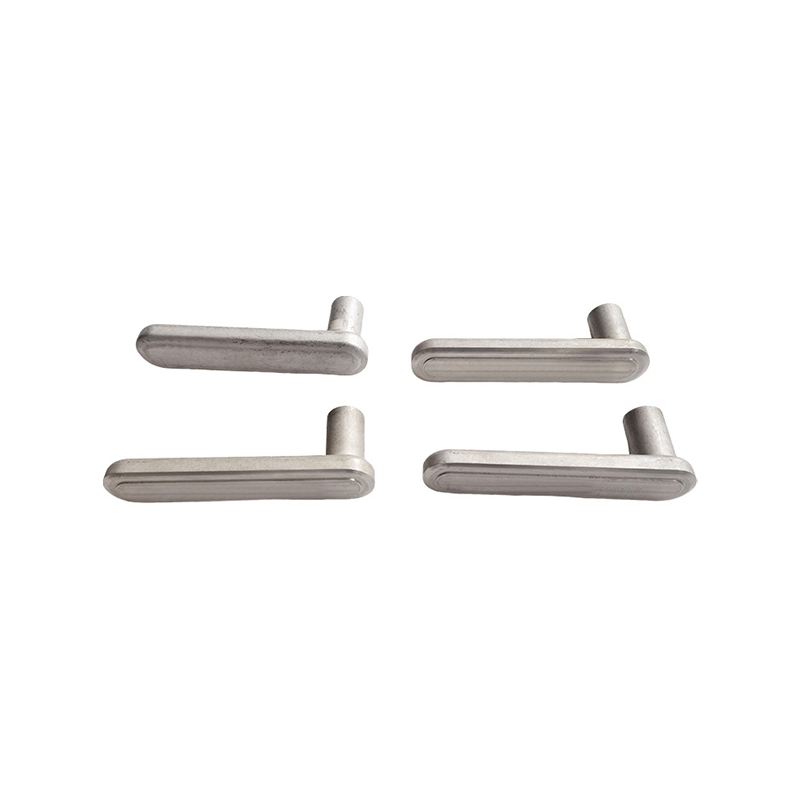
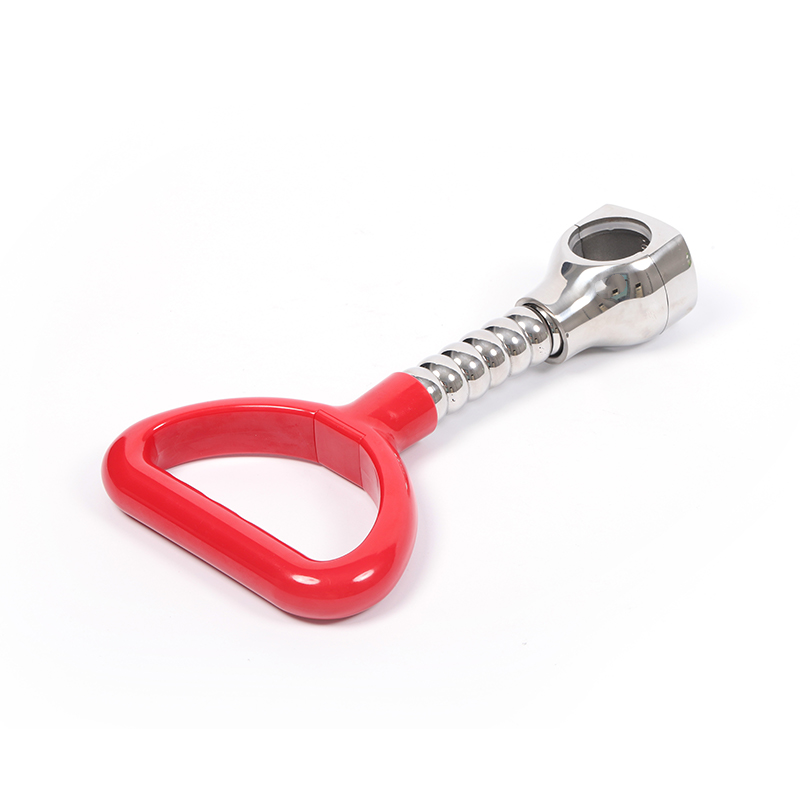
OEM/ODM Hot Forged Parts Suppliers, ManufacturersAs China Hot Forged Parts manufacturers and Hot Forged Parts suppliers, Ningbo Chengen Machinery Co., Ltd. offers OEM/ODM Hot Forged Parts.View Product →Hot steel forging is not the easiest way to make a steel part, but it is often the most reliable one for industrial vehicles. The process refines grain structure, aligns material flow with loads, and delivers the fatigue strength that keeps machinery working. A supplier that combines hot forging with machining and quality controls can reduce your project risk and shorten your supply chain.