
 English
 Español
 русский
Content
- 1 Start With the Load, Not Just the Material Grade
- 2 What Makes a Part a Custom Alloy Steel Forging?
- 3 Alloy Steel Grades That Work Well in Forging
- 4 Why Forge in Alloy Steel Instead of Cast or Machined Stock?
- 5 Hot Forging vs. Cold Forging: Matching the Process to the Part
- 6 The Custom Forging Process: From Drawing to Finished Part
- 7 Quality Considerations for Custom Alloy Steel Forgings
- 8 Applications That Depend on Custom Alloy Steel Forgings
- 9 How to Select a Supplier for Custom Alloy Steel Forged Parts
- 10 Choose Clear Specifications, Not Just a Lower Price
Start With the Load, Not Just the Material Grade
When a component is specified as a custom alloy steel forged part, the drawing is only the beginning. The real decision is how the part will be loaded, which failure mode matters most, and which forging route can deliver the required properties at a cost the program can support.
A forged alloy steel part is a system: the material grade, forging method, heat treatment, and finishing operations all interact. A good supplier will ask about the operating environment before quoting, because a hydraulic pump shaft does not have the same requirements as a gear in a construction machine.
What Makes a Part a Custom Alloy Steel Forging?
A custom alloy steel forging is a component produced by deforming a heated or cold alloy steel blank into a specific shape, then machining or heat treating it to customer-defined requirements. It is made to a drawing, not selected from a catalogue.
Alloy steels contain elements such as chromium, molybdenum, nickel, or vanadium to improve strength, hardenability, toughness, or wear resistance. Forging refines the cast structure and creates a grain flow that follows the part contour, which is why forged parts often outperform machined-from-bar stock under impact and cyclic loading.
Alloy Steel Grades That Work Well in Forging
Material selection is the first technical gate. Common choices for custom alloy steel forgings include 4140, 4340, 8620, and 52100.
| Grade | Approx. Equivalent | Key Properties | Typical Applications |
|---|---|---|---|
| 4140 | 42CrMo | Good strength and toughness; through-hardening | Shafts, gears, hydraulic components |
| 4340 | 40CrNiMo | High hardenability; high strength | Heavy-duty axles, high-load structural parts |
| 8620 | 20CrNiMo | Tough core; carburizing grade | Gears, pinions, splined shafts |
| 52100 | GCr15 | High hardness and wear resistance | Bearings, races, rolling elements |
The best grade also depends on section size, required hardness profile, and whether the part will be induction-hardened, carburized, or through-hardened.
Why Forge in Alloy Steel Instead of Cast or Machined Stock?
Forging is not always the cheapest starting point, but it is often the most reliable when a part carries structural responsibility. The main reason is grain flow: deformation aligns the material's grain structure with the external shape, so the metal resists bending and impact along the load path.
Grain flow improves fatigue life
A machined-from-solid part interrupts the grain structure, which can create crack initiation points. A forged part keeps continuous grain lines, increasing fatigue and impact resistance. This is decisive for steering knuckles, connecting rods, and crane hooks.
Heat treatment responds more predictably
Alloying elements such as chromium and molybdenum improve hardenability, allowing consistent hardness and strength in larger cross-sections.
Hot Forging vs. Cold Forging: Matching the Process to the Part
After the grade is selected, the next question is hot forging or cold forging. Both deform alloy steel, but they produce different tolerances, surface finishes, and mechanical properties.
Hot forging
The steel is heated above its recrystallization temperature, usually from 900 to 1250 °C, before shaping. This allows complex geometries, larger sizes, and a wide range of alloy steel grades. The trade-off is wider tolerances and a scale layer that often needs machining.
Cold forging
Cold forging deforms material at or near room temperature. It creates near-net shapes with tight tolerances and a smooth surface, and it adds strength through work hardening. The steel must be ductile and the geometry cannot require extreme material flow.
| Factor | Hot Forging | Cold Forging |
|---|---|---|
| Forging temperature | Above recrystallization (900 to 1250 °C) | Near room temperature |
| Shape complexity | Broad range, including complex geometries | Limited to simpler shapes |
| Dimensional accuracy | Wider tolerance; machining often required | Tight tolerance; near-net shape possible |
| Surface finish | Rougher, with scale | Smooth |
| Mechanical properties | Set by heat treatment | Additional strength from work hardening |
| Suitable alloys | Most alloy steels | Lower-carbon and softer alloys generally |
For more detail, see our comparison of hot forged parts vs cold forged parts.
When a part has a demanding shape but needs a tight tolerance on critical surfaces, a common route is hot forging followed by machining. For simpler precision parts, a supplier may produce cold-forged precision transmission parts directly to near-net shape.
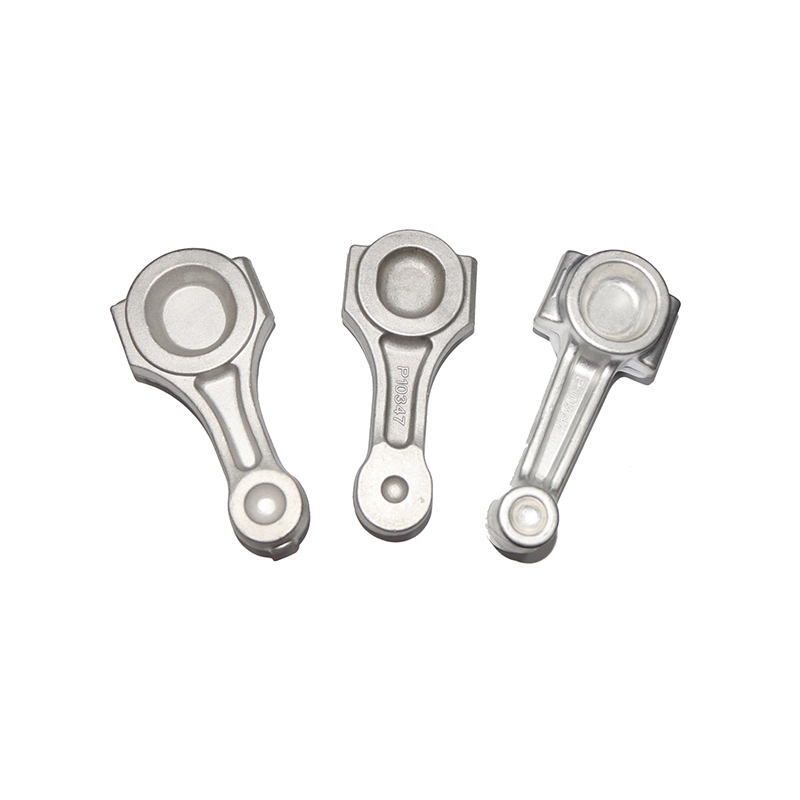 Custom Cold Forged Precision Transmission Parts Suppliers, Factory - Ningbo ChenNingbo Chengen Machinery Co., Ltd. is China custom Cold Forged Precision Transmission Parts suppliers and factory,Product OverviewPrecisi...View Product →
The Custom Forging Process: From Drawing to Finished Part
A typical custom alloy steel forging order follows these stages:
- Engineering review. The supplier evaluates the drawing and proposes the forging method.
- Material selection. The grade is locked to the mechanical property requirements.
- Tool design and die making. Dies include allowances for shrinkage, draft, and machining.
- Heating or surface preparation. The billet is heated evenly or cleaned for cold forging.
- Forging operation. The blank is formed through upsetting, blocking, and final impression.
- Trimming and deburring. Flash is removed and the part is inspected for visible defects.
- Heat treatment. Normalizing, quench and temper, or carburizing develops the required hardness and toughness.
- Machining. Critical surfaces are finished by CNC turning, milling, or grinding.
- Inspection and reporting. Dimensional checks, hardness tests, and material certificates are provided.
Because forging and machining are connected, buyers often prefer a supplier that controls both stages. Reviewing the forged parts range is a practical first step before sending an inquiry.
Quality Considerations for Custom Alloy Steel Forgings
Quality is not limited to final dimensions; the buyer needs evidence that the material and process are controlled from the start.
Material traceability
Reputable suppliers keep records for each heat number and provide material certificates confirming chemical composition.
Mechanical testing and hardness
Tensile strength, yield strength, impact energy, and hardness should be tested to the specified standard.
Non-destructive inspection
Ultrasonic testing can reveal internal discontinuities; magnetic particle or dye penetrant inspection detects surface cracks.
Applications That Depend on Custom Alloy Steel Forgings
Alloy steel forgings are used when a failure would cause downtime, injury, or high maintenance cost.
Automotive and powertrain
Steering knuckles, connecting rods, and axle components are forged for predictable energy absorption and long fatigue life. Chengen produces custom alloy steel forged auto parts with heat treatment and CNC finishing under one roof.
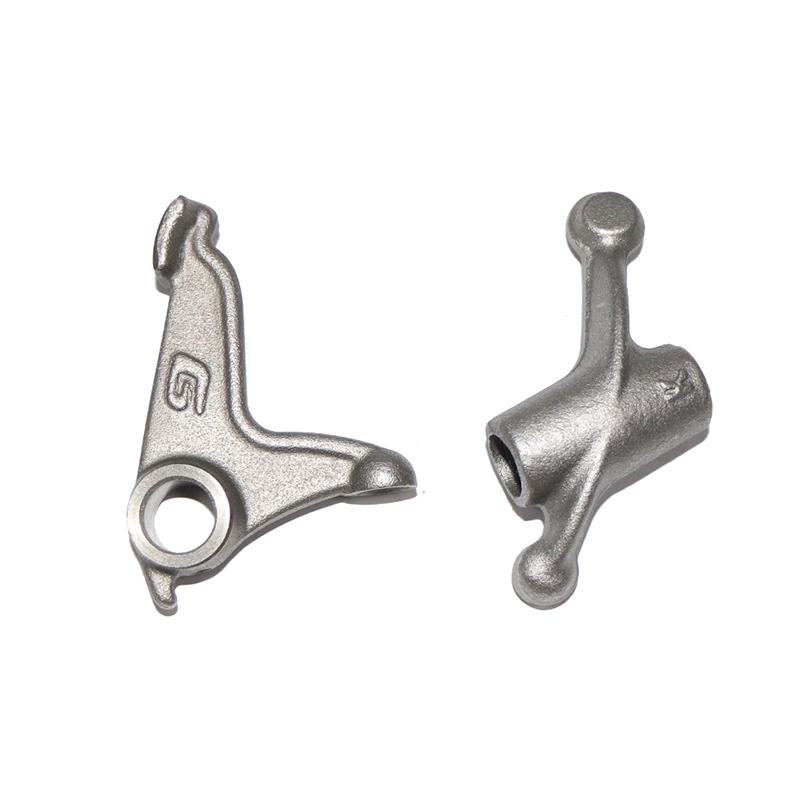 Custom Hot Forged Auto Parts Suppliers, Factory - Ningbo Chengen Machinery Co., Ningbo Chengen Machinery Co., Ltd. is China custom Hot Forged Auto Parts suppliers and factory,Product OverviewCore Process: Precision Ho...View Product →
Industrial machinery and heavy equipment
Hydraulic cylinder rods, gear blanks, and pump shafts operate under heavy shock and abrasive conditions. Buyers can evaluate forged parts for industrial equipment and heavy machinery to assess whether a supplier's production scope matches their needs.
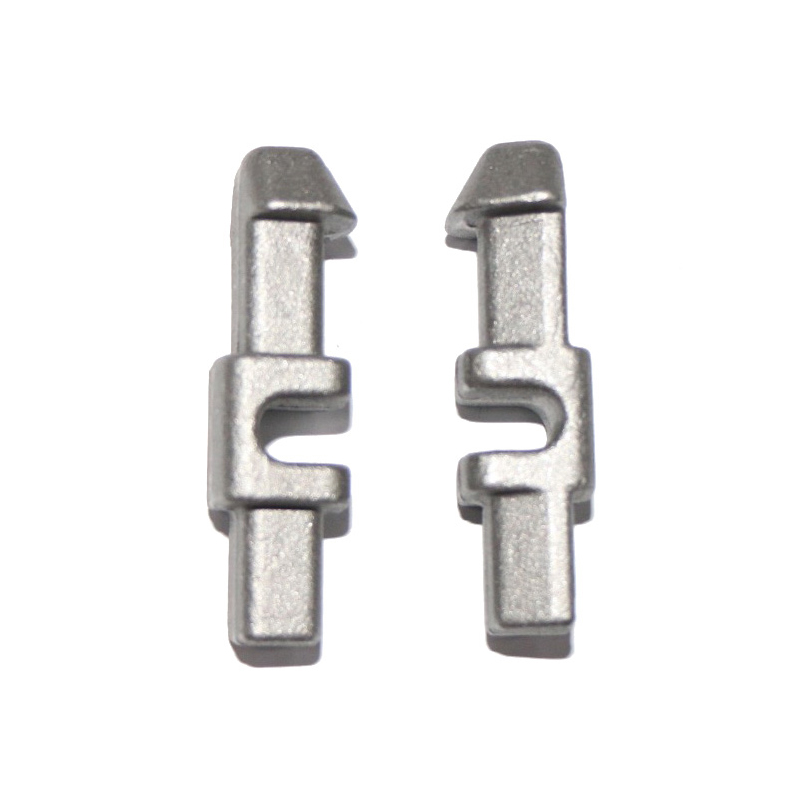 Custom Hot Forged Industrial Equipment And Heavy Machinery Suppliers, Factory - Ningbo Chengen Machinery Co., Ltd. is China custom Hot Forged Industrial Equipment And Heavy Machinery suppliers and factory,Product Over...View Product →
Agricultural, construction, and rail applications
Machinery links, structural brackets, and rail components follow the same logic: keep the grain flow continuous and use heat treatment to tune final properties.
How to Select a Supplier for Custom Alloy Steel Forged Parts
The lowest quotation rarely produces the lowest total cost. A good supplier reduces risk across tool design, production, and inspection.
Look for in-house finishing capabilities
If the forging supplier sends every part to an outside machine shop, you pay for extra logistics and tolerance stacking. Integrated machining avoids this.
Check process control and certifications
Ask about die maintenance, furnace calibration, and inspection equipment. Certifications are a baseline, not a guarantee.
Demand engineering feedback
A good supplier will comment on draft angles, radii, and grain flow before quoting. If they do not ask about the application, be cautious.
Choose Clear Specifications, Not Just a Lower Price
Custom alloy steel forged parts are a deliberate engineering choice. The grade, forging method, heat treatment, and machining all affect the final performance. Start with service conditions, review the supplier's process capabilities, and confirm the required testing documentation.
When you are ready to discuss a new project, contact the Chengen engineering team with your drawing or a rough sketch. Earlier supplier involvement leaves more room to reduce tooling cost and improve manufacturability.






