
 English
 Español
 русский
Content
- 1 What Is Alloy Steel Forging and Why It Matters
- 2 How to Evaluate an Alloy Steel Forging Supplier
- 3 Alloy Steel Grades and Their Typical Applications
- 4 Automotive and Precision Transmission Forging
- 5 Post-Forging Machining and One-Stop Capabilities
- 6 Quality Systems and What to Ask a Supplier
- 7 Final Takeaways
When you are sourcing alloy steel forgings for a new gear shaft, a structural bracket, or a heavy-duty machinery component, the supplier you choose will influence not only the cost per part but also the yield strength, fatigue life, and long-term reliability of your final assembly. A capable partner should be able to hold material chemistry within specification, control forging temperature and deformation ratios, and coordinate secondary operations such as heat treatment and machining. In our experience, the first step is to compare prospective suppliers on the basis of material grades, forging process control, quality traceability, and post-forging machining capabilities. This article explains each of these criteria in practical terms and offers a checklist you can use in your next RFQ.
What Is Alloy Steel Forging and Why It Matters
Alloy steel is not a single material, but a family of engineering steels that contain deliberate additions of elements like chromium, molybdenum, nickel, and vanadium. These additions change the material's response to heat treatment, improve hardenability, and raise toughness at a given strength level. Forging reshapes the material while it is hot enough to be plastically deformed. Because the grain structure follows the contours of the part, forged alloy steel components have better fatigue and impact resistance than components cut from solid bar or produced by casting. This is why alloy steel forgings are used in applications such as automotive drivelines, industrial pump shafts, water treatment pressure parts, agricultural machinery, and heavy equipment structural members.
An alloy steel forging supplier must be able to explain, before production starts, which grade makes sense for your loading conditions. For example, a 4140 forging offers a good balance of strength and toughness, making it a popular choice for shafts and gears. A 4340 forging has higher hardenability and is often used for heavy-duty axles and crankshafts. A 8620 forging can be case-hardened after forging to create a wear-resistant surface on a tough core. The important point is that the supplier should not simply have a generic steel grade in stock; it should understand how heat treatment affects final mechanical properties and be willing to discuss the trade-offs with you.
How to Evaluate an Alloy Steel Forging Supplier
Material Coverage and Process Control
Start by auditing the supplier's material coverage. Ask for a list of the alloy steel grades they regularly forge. The list should include common grades like 4130, 4140, 4340, 8620, 6150, and any standard you use for your product. If the supplier works with a limited set of materials, you may be forced to substitute a grade that is not optimized for your part. Material certification is another important point. The forging shop should be able to provide mill test certificates and maintain heat number traceability from raw material to finished forging.
Forging Method and Tolerance
Clarify whether the supplier uses open-die forging, closed-die forging, hot forging, or cold forging. Each method has different consequences for part geometry, tooling cost, and achievable tolerance. Open-die forging is suitable for large, low-volume components. Closed-die forging provides better repeatability and higher production rates. Hot forging reduces forging loads and allows large cross-section reduction, while cold forging produces excellent surface finish and tight dimensions on smaller parts. The supplier should recommend the method that matches your annual volume and quality requirements.
Secondary Operations
Most forged parts are not shipped as raw forgings. They need machining for bearing seats, threads, seal grooves, and critical bores. A supplier that can perform CNC machining after forging helps you avoid shipping parts to multiple vendors. When the same organization is responsible for forging and machining, responsibility for concentricity, runout, and final dimensional verification remains with one vendor. You can see how dimensional tolerances are discussed in our article on alloy steel machined parts grades, tolerances and manufacturing guidance.
At the same time, evaluate the supplier's ability to manage heat treatment and surface finishing. Many alloy steel forgings must be normalized, quenched, and tempered before machining. If heat treatment is outsourced, the supplier should have a clear process document and consistent verification at each lot.
Alloy Steel Grades and Their Typical Applications
The following table lists some common alloy steel forging grades used in industrial projects. Use this as a reference point rather than a final material selection, because actual design requirements, section thickness, and standard specifications will determine the best choice.
| Grade | Typical Features | Common Forged Parts |
|---|---|---|
| 4130 | Medium strength, good weldability | Structural frames, hydraulic components |
| 4140 | Chromium-molybdenum, balanced toughness and strength | Shafts, gears, connecting rods, tool holders |
| 4340 | High hardenability, excellent fatigue resistance | Heavy-duty axles, crankshafts, aircraft parts |
| 8620 | Case-hardening type, tough core and wear-resistant surface | Pinions, transmission components, camshafts |
| 6150 | High fatigue strength, spring characteristics | Suspension parts, springs, mining wear parts |
Once the grade is confirmed, the next step is to match the forging route to the component geometry. For industrial equipment and heavy machinery parts, hot forging is often preferred because it allows substantial deformation and produces consistent mechanical properties across large cross-sections.
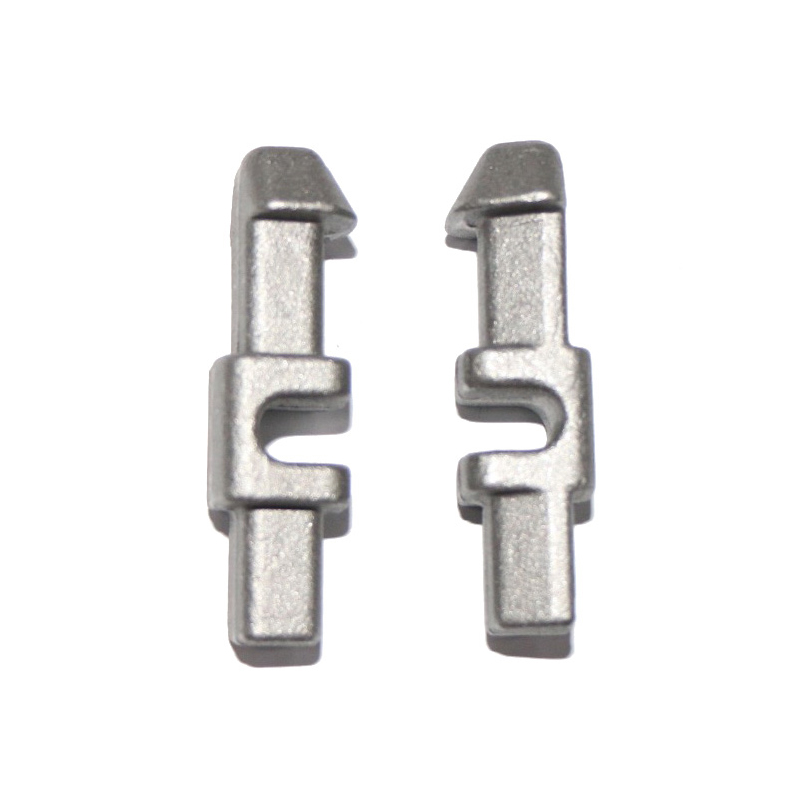 Hot Forged Components for Industrial Equipment and Heavy MachineryThis section highlights hot forging for industrial equipment and heavy machinery, where aligning grain structure with service loads improves durability. It explains why this process suits large cross-sections and demanding applications.View Product →
At our facility, hot forging is used to produce industrial equipment and heavy machinery components such as flanged shafts, load-bearing blocks, and valve housings. The forging process allows us to align the grain structure with the service loading direction, which improves component durability.
Automotive and Precision Transmission Forging
The automotive industry is one of the most demanding consumers of alloy steel forgings. In this sector, safety and reliability are regulated, and part inspection requirements are rigorous. Forged alloy steel parts such as gear shafts, axle shafts, connecting rods, and steering knuckles are chosen because they must withstand repeated cyclic loads and occasional impact without premature failure. When you evaluate an automotive forging supplier, ask about its experience with production part approval processes and whether it can maintain statistical process control over critical dimensions.
At Ningbo Chengen Machinery, we produce hot-forged auto parts for customers who need alloy steel components with tight tolerances and consistent mechanical properties.
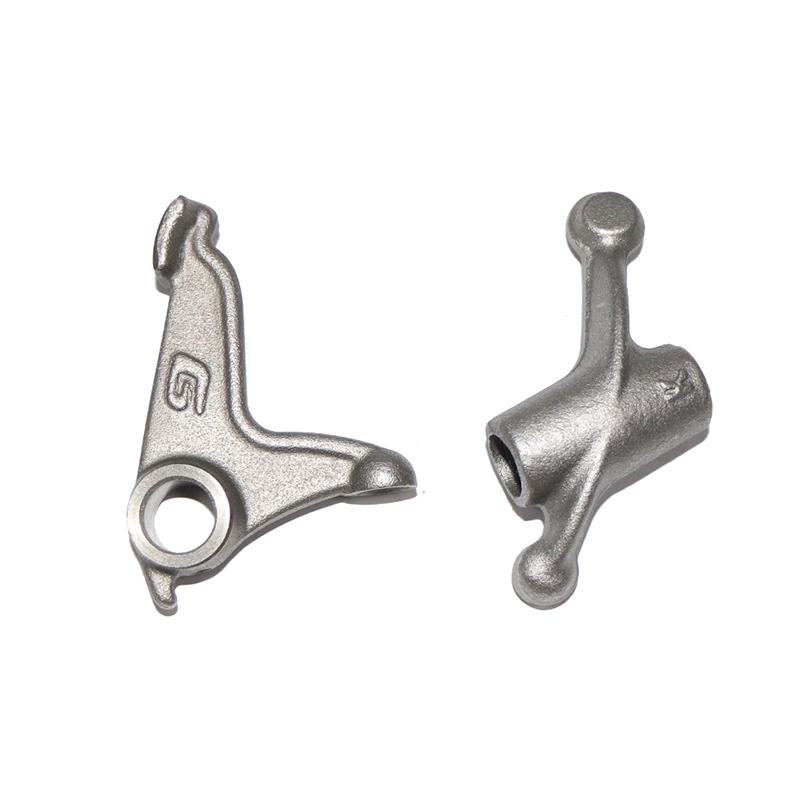 Hot Forged Auto Parts with Tight Tolerances and Consistent PropertiesThis part covers hot forged auto parts for alloy steel components requiring tight tolerances and uniform mechanical properties. The context emphasizes the importance of matching forging route to geometry and controlling tolerance accumulation.View Product →
Cold forging also plays an important role in precision part manufacturing. Parts like transmission gears, small shafts, and valve components often benefit from cold forging because the process is net-or near-net-shape, requires less material, and provides a smooth surface finish. For these components, the supplier must be able to control tolerance accumulation from forging through CNC machining.
Post-Forging Machining and One-Stop Capabilities
A forged blank is rarely the final part. Bearing seats, O-ring grooves, threads, locating bores, and polished surfaces all require post-forging machining. When the same supplier operates both forging and CNC machining under one facility, you avoid multiple transportation steps and reduce the risk of dimensional misalignment. Our company's 12,000-square-meter production base houses forging, casting, die casting, and CNC machining, so a single order can move from raw material to finished part without leaving the factory.
Cold forged precision transmission parts are a good example of an application that depends on this integrated route. These parts must combine high strength from cold forming with precise dimensional control on final machining. If the forging and machining operations are separated between companies, maintaining tight runout and parallelism becomes much harder.
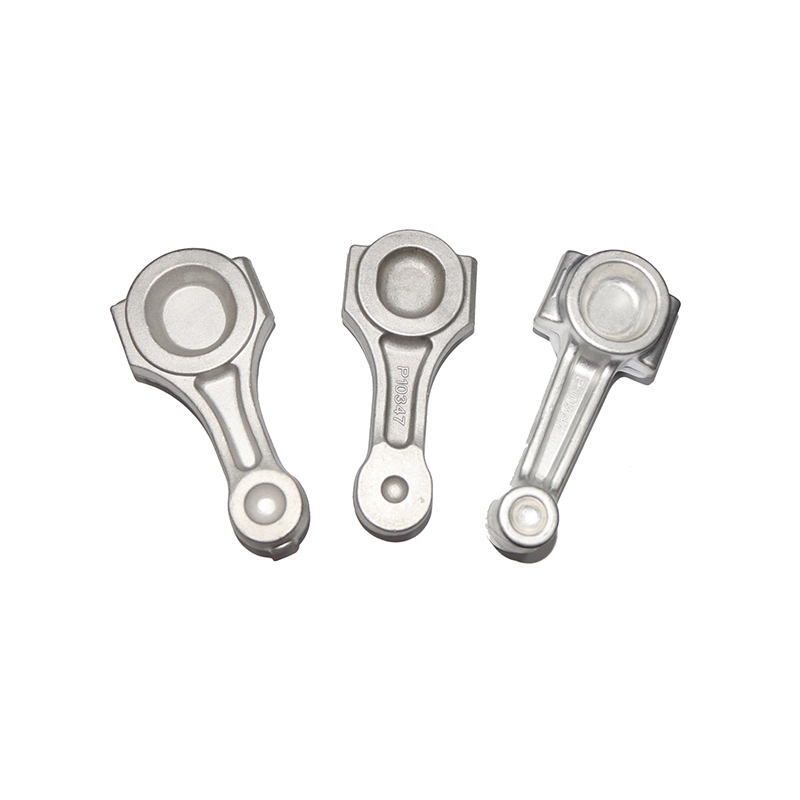 Cold Forged Precision Transmission Parts and Integrated MachiningThis entry focuses on cold forged precision transmission parts that need high strength and precise dimensional control. It shows why integrating forging and machining is critical to maintain tight runout and parallelism.View Product →
By keeping these operations in one place, our quality team can measure critical dimensions after forging and again after machining, which gives you a complete record of the part condition at every step.
Quality Systems and What to Ask a Supplier
Ask how the supplier verifies mechanical properties after forging. Tensile tests on forged coupons can confirm yield strength and ultimate tensile strength, while hardness tests can indicate whether the heat treatment was effective. If the part is safety critical, ask whether the supplier can perform ultrasonic inspection, magnetic particle inspection, or dye penetrant inspection. The inspection method must be specified on the drawing, and the supplier should be willing to assign a responsible inspector for each batch.
Traceability is another crucial element. In a well-run forging shop, each part should be linked to its heat number, forging batch, heat treatment cycle, and inspection record. This level of documentation is not extra work; it is the foundation of a reliable supply chain. If a part fails in service, a traceable record allows you to identify the root cause quickly instead of quarantining thousands of parts.
During supplier audits, also look at how the company handles nonconforming material. Does the supplier quarantine rejected parts promptly? Does it submit corrective action reports? Does it track scrap or rework rates? A supplier with a structured quality management system will make this information available without hesitation.
Final Takeaways
Choosing an alloy steel forging supplier is ultimately a matter of balancing material knowledge, process capability, and project management. The lowest quoted price may not look so attractive after a field failure or a delayed shipment. Look for a supplier that offers the alloy steel grades you need, has the right forging process for your geometry, can perform the secondary machining and heat treatment in one facility, and is transparent about quality records.
Before you commit to a full production run, send your part drawing and application conditions to the supplier and ask for a detailed proposal. The proposal should include material grade, forging method, heat treatment specification, machining allowance, inspection method, lead time, and unit price. This approach will help you compare suppliers on a level playing field and select the partner most likely to deliver consistent alloy steel forgings for your products.


