
 English
 Español
 русский
Content
- 1 A360 Aluminum Composition and What Each Element Does
- 2 Mechanical and Physical Properties of A360 Aluminum
- 3 What A360 Aluminum Does Well, and Where It Falls Short
- 4 A360 vs A380 and ADC12: Choosing for Your Drawing
- 5 Common Applications of A360 Aluminum Parts
- 6 Design, Machining, and Finishing Notes for A360
- 7 From Drawing to Finished A360 Part: What to Send Us
- 8 Questions We Hear About A360 Aluminum
Ask the people who run our die casting cells which aluminum they trust for a part that has to sit outside for a decade, and A360 usually gets named first. It is not the cheapest alloy on the shelf and it is not the hardest, but it does two things exceptionally well: it ignores damp air and salt spray, and it holds pressure without weeping.
A360 aluminum is a die casting alloy registered by the Aluminum Association as A360.0, with UNS number A13600. Think of it as the familiar 360 alloy refined into a purer form, with a tighter iron ceiling, deliberately low copper, and a little more magnesium to bring the strength back. The result fills dies easily, seals reliably, and resists corrosion far better than the copper-rich A380 that so many drawings default to.
A360 Aluminum Composition and What Each Element Does
These are the limits we work to when we buy ingot, and they explain most of how the alloy behaves. Every heat arrives with a certificate, because a small drift in iron or copper changes what a finished part will do in service.
| Element | Typical Range (wt%) | Role in the Casting |
|---|---|---|
| Silicon (Si) | 9.0 - 10.0 | Keeps the melt fluid so thin ribs and bosses fill cleanly; adds wear resistance |
| Iron (Fe) | 0.60 max | Capped tightly; low iron protects ductility and limits brittle phases |
| Copper (Cu) | 0.60 max | Held low on purpose, which is the main reason A360 resists corrosion |
| Magnesium (Mg) | 0.40 - 0.60 | The primary strength contributor in this alloy |
| Manganese (Mn) | 0.35 max | Helps control iron-bearing phases in the cast structure |
| Nickel (Ni) | 0.50 max | Trace level; adds a little elevated-temperature stability |
| Zinc (Zn) | 0.50 max | Impurity limit |
| Tin (Sn) | 0.15 max | Impurity limit |
| Aluminum (Al) | Balance | The matrix that carries everything else |
A380 carries 3.0 to 4.0 percent copper, and that copper is what makes it hard and what makes it corrode. Take the copper down to a trace, keep silicon high for fluidity, and add magnesium for strength. That is A360 in one sentence.
Mechanical and Physical Properties of A360 Aluminum
| Property | Typical Value (Metric) | Typical Value (Imperial) |
|---|---|---|
| Tensile strength | 315 MPa | 46 ksi |
| Yield strength (0.2% offset) | 170 MPa | 25 ksi |
| Elongation | About 3% | About 3% |
| Hardness | 75 - 85 HB | 75 - 85 HB |
| Density | 2.63 g/cm3 | 0.095 lb/in3 |
| Thermal conductivity | About 113 W/mK | About 65 Btu/ft h F |
| Melting range | 540 - 590 C | 1004 - 1094 F |
| Fatigue strength | About 140 MPa | About 20 ksi |
Treat these as typical values rather than promises. Thick sections cool slowly and thin ribs cool fast, so the same alloy can measure differently on two parts from the same die. When a project carries a hard strength or pressure requirement, we cast a trial sample and test it instead of arguing from a data sheet.
What A360 Aluminum Does Well, and Where It Falls Short
Corrosion Resistance and Pressure Tightness
Low copper is the whole story on corrosion. Without the copper-rich phases that set up tiny galvanic cells, A360 tolerates salt spray, humidity, and mildly chemical environments, which is why it turns up on docksides, in wash-down areas, and under vehicles. High silicon then works with excellent fluidity to produce dense, well-fed castings with little porosity, so a pump housing or valve body will hold fluid or gas where a gassier alloy would seep.
Strength That Survives Warm Service
Parts near engines, motors, or hot equipment keep more of their strength in A360 than in the copper-heavy alloys, and they stay dimensionally calm as temperatures rise and fall through the working day.
Where Another Alloy Deserves the Job
A380 is stronger and harder at room temperature, machines more cleanly, and usually costs less per kilogram. If your part needs a bright cosmetic anodized finish, deep wear resistance, or maximum stiffness in a very small space, another alloy or another process is the honest answer. A360 is also not a realistic welding candidate, and we design joints around that rather than pretend otherwise.
A360 vs A380 and ADC12: Choosing for Your Drawing
Here is the short comparison we send when a customer asks why we are quoting A360 instead of the alloy they used on the last project.
| Consideration | A360 | A380 | ADC12 (A383) |
|---|---|---|---|
| Silicon content | 9.0 - 10.0% | 7.5 - 9.5% | 9.5 - 11.5% |
| Copper content | 0.60% max | 3.0 - 4.0% | 2.0 - 3.0% |
| Corrosion resistance | Excellent | Moderate | Moderate |
| Pressure tightness | Excellent | Good | Very good |
| Machinability | Fair, gummy chips | Very good | Good |
| Best suited to | Outdoor, marine, fluid handling | General purpose hardware | Thin-wall tight tolerance parts |
As a rule of thumb, choose A360 when the part meets weather, salt, or fluid under pressure. Stay with A380 for general hardware and enclosures where corrosion is not a factor. ADC12 earns its place on thin-wall, tight-tolerance work where filling the die is the main difficulty.
Common Applications of A360 Aluminum Parts
- Pump housings, valve bodies, and hydraulic manifolds that must seal
- Marine hardware, dock fittings, and outdoor enclosures exposed to salt air
- Automotive and powersports components that run warm
- Motor housings, gearbox covers, and electrical enclosures
- Architectural and building hardware for coastal or humid climates
- Lawn, garden, and agricultural equipment parts that see rain and soil
Automotive and powersports work leans on A360 for under-hood and under-body parts where a small weight saving still has to survive road salt. That same reasoning sits behind the broader move toward lightweight aluminum die casting across the industry.
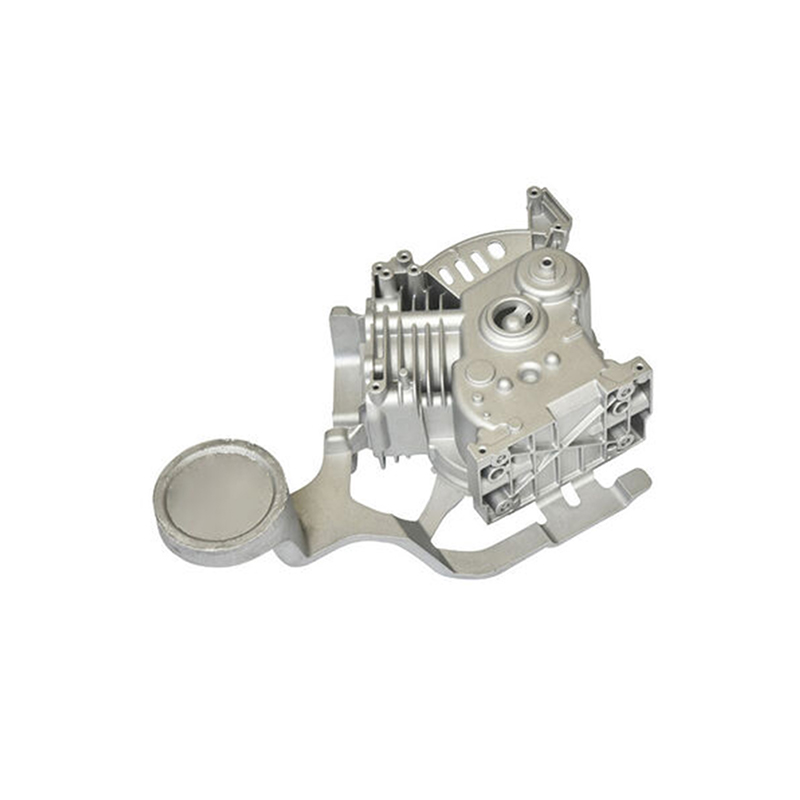 Aluminum Die Cast Powertrain Components for Vehicle and MachineryFor automotive and machinery powertrains, this range covers transmission cases, engine cylinder heads, and oil pans in lightweight, high-strength aluminum die casting.View Product →
Fluid power is the other natural home for this alloy. Anything that has to hold water, oil, or air at pressure benefits from the dense structure A360 produces, which is why so much of our work in this material ends up as housings and valve bodies.
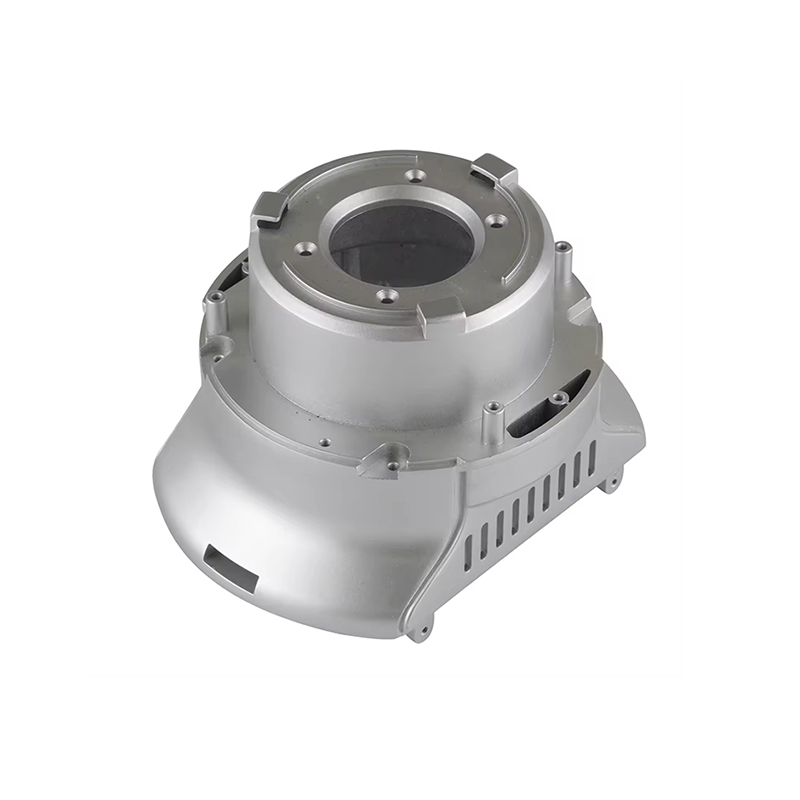 Aluminum Die-Cast Industrial Pump Housings and Hydraulic Valve BodiesFor fluid-power applications, these lightweight, corrosion-resistant aluminum components support industrial pump housings and hydraulic valve bodies under pressure.View Product →
Motor and electrical enclosures are a quieter but steady stream of A360 projects. The alloy sheds heat reasonably well, machines into clean mounting faces, and does not rust when equipment sits in an unheated building or a coastal yard.
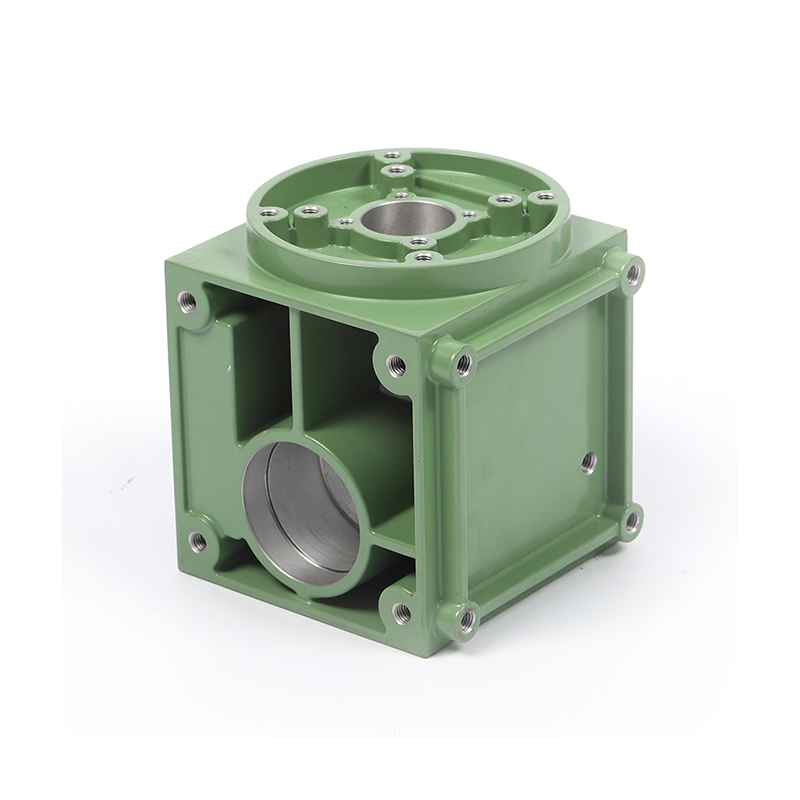 Precision Aluminum Die Cast Small and Medium Motor HousingsFor small and medium motors, these die-cast housings provide structural support, thermal management, and electromagnetic shielding across industrial, appliance, and power-tool uses.View Product →
Design, Machining, and Finishing Notes for A360
Wall Thickness, Draft, and Tooling
A360 fills thin sections willingly, but thin walls fight pressure tightness, so we usually steer designers toward walls of roughly 1.5 to 3 mm, uniform thickness, 1 to 2 degrees of draft, and generous fillets. Isolated heavy masses are the classic source of shrinkage porosity. Note also that the low iron content affects die soldering behaviour, so gate placement deserves attention during tool design. You can see how we apply these rules across the aluminum die casting parts we build.
Machining A360 Castings
Because there is so little copper, chips come off stringy rather than brittle. Sharp carbide tooling, high positive rake, steady feed rates, and good coolant flow keep surfaces clean and avoid built-up edge. We normally cast close to final shape and then hold critical tolerances on our CNC machines, which is far more economical than machining everything from bar stock.
Surface Finishing Options
Shot blasting, vibratory finishing, powder coating, e-coating, and chromate conversion all work well on A360. Anodizing is possible but the high silicon content makes cosmetic anodizing patchy, so we recommend it only where wear or corrosion protection matters more than appearance.
From Drawing to Finished A360 Part: What to Send Us
A quick quotation starts with a short, complete package. These are the items that let us give you a real number instead of a guess:
- A 2D drawing or 3D model with tolerances marked
- The alloy you want, such as A360.0, plus any heat treatment or condition
- Order quantity and expected annual volume
- Critical dimensions, sealing surfaces, and appearance requirements
- Surface finish or coating specification
- Inspection, testing, or documentation requirements
We review every file for casting feasibility and come back with suggestions on wall thickness, draft, machining stock, and tooling before anything is cut. That conversation usually saves more money than any later negotiation over price.
Questions We Hear About A360 Aluminum
Is A360 weldable?
Not in any practical sense. Die casting alloys trap gas and carry a silicon-rich structure, so welds tend to be weak and porous. Design joints as cast features or use mechanical fastening and adhesives.
Is A360 stronger than A380?
At room temperature, no. A380 is generally stronger and harder. A360 wins on corrosion resistance, pressure tightness, and strength retention at higher temperatures.
What is the difference between 360 and A360?
A360 is the purer version, with a tighter iron limit and lower overall impurities, giving better ductility and corrosion resistance. Standard 360 tolerates more iron and more recycled content.
None of this is meant to push you toward one alloy for everything. If you send us a drawing and A380 or ADC12 will serve you better, we will say so. Where A360 does fit, our foundry and machine shop sit under one roof in Ningbo, so the casting, the machining, and the finishing all move through the same schedule and the same quality checks.
Send over your part details and we will come back with a practical recommendation, a tooling plan, and a quotation you can compare against anyone else's.


