English
 Español
 русский
Content
- 1 The Die Casting Process for Heat Sinks
- 2 Materials Used in Die Casting Heat Sinks
- 3 Design Considerations for Die Casting Heat Sinks
- 4 Surface Treatments for Die Casting Heat Sinks
- 5 Advantages of Die Casting Heat Sinks
- 6 Limitations and Challenges of Die Casting Heat Sinks
- 7 Die Casting vs. Other Heat Sink Manufacturing Methods
- 8 Applications of Die Casting Heat Sinks
- 9 Quality Control in Die Casting Heat Sink Production
- 10 Conclusion
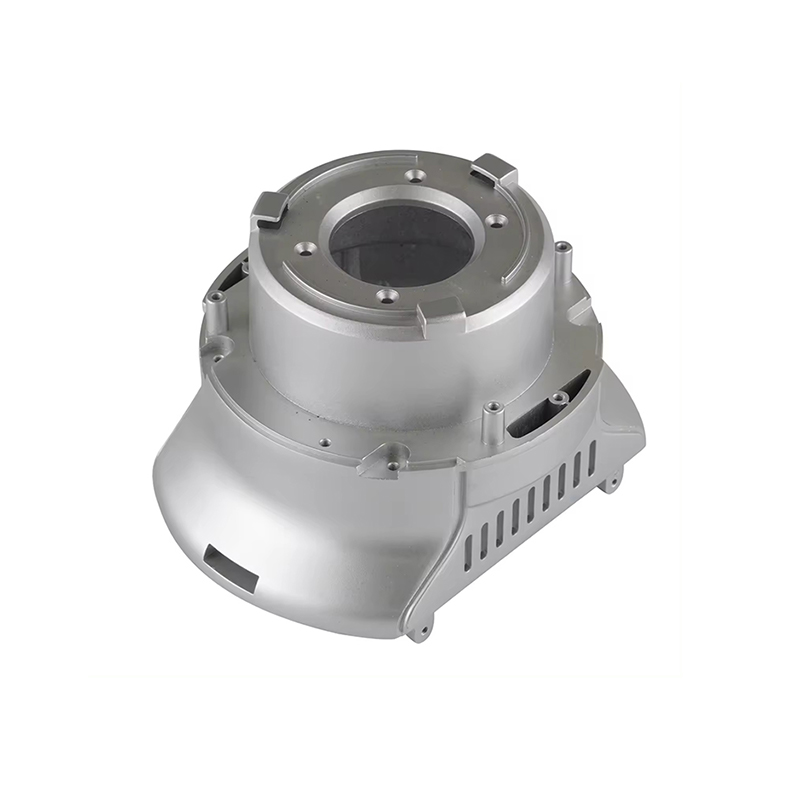
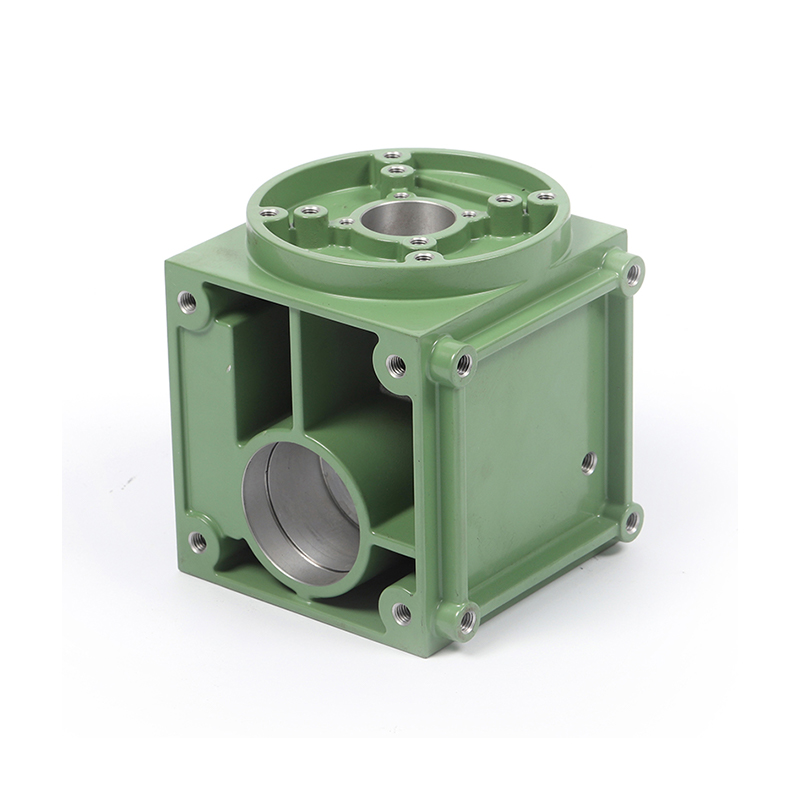
A die casting heat sink is a thermal management component produced by injecting molten metal—most commonly an aluminium alloy—into a precision-engineered steel mould under high pressure. The mould defines every geometrical feature of the finished part: the base, the fin array, mounting bosses, and any integrated structural or electrical features. Once the metal solidifies and the mould opens, the resulting heat sink is geometrically close to its final form, requiring little or no secondary machining before use.
Heat sinks in general work by drawing thermal energy away from a heat-generating component—a power transistor, CPU, LED module, or motor controller—and dissipating that energy into the surrounding air or a cooling fluid. A die casting heat sink achieves this through the inherent thermal conductivity of its metal alloy and through the large surface area created by its fin structures, which maximise the contact between the component and the ambient cooling medium.
Die casting is one of several manufacturing methods used to produce heat sinks—others include extrusion, skiving, forging, and bonded-fin construction—but it occupies a distinctive position because of its ability to produce complex three-dimensional geometries at high volume and with excellent part-to-part consistency. Where extrusion is limited to uniform two-dimensional cross-sections, die casting can produce fins that vary in height, pitch, and orientation across a single component, integrate mounting brackets and internal channels, and accommodate undercuts and hollow features that would be impossible to extrude.
The Die Casting Process for Heat Sinks
Understanding how die casting works helps explain both the capabilities and the constraints of heat sinks produced this way. The process unfolds in several well-defined stages.
Mould Design and Preparation
The foundation of any die casting heat sink is the steel mould, also called the die. It consists of two halves: the cover die half, which forms one face of the component, and the ejector die half, which forms the other and contains the ejector pins used to push the finished casting out after solidification. The line where the two halves meet is known as the parting line, and its location must be carefully chosen by the tool designer to ensure that the finished casting slides cleanly off the cover half and remains in the ejector half when the mould opens.
The die itself is typically machined from hardened H13 or similar tool steel capable of withstanding thousands of high-pressure, high-temperature injection cycles. Designing a die for a complex heat sink—with many thin fins, close tolerances, and integrated features—is a significant engineering undertaking. Die design must account for metal flow paths, cooling channel positions within the die, gate and runner locations, and venting arrangements to allow trapped air to escape during injection.
Metal Melting and Injection
Once the die is prepared and clamped closed under high hydraulic pressure, molten aluminium alloy—held at a temperature typically between 620 °C and 700 °C depending on the alloy—is injected into the die cavity at pressures ranging from approximately 10 to 175 MPa (1,500 to 25,000 psi) for aluminium. This high injection pressure forces the molten metal to fill every detail of the die cavity, including thin fins and small features, before it has time to solidify.
There are two principal variants of the die casting process relevant to heat sink production:
- Hot chamber die casting: The injection mechanism is submerged in the molten metal reservoir. This method is faster and suited to lower-melting-point alloys such as zinc. It is not suitable for aluminium, which would damage the submerged components.
- Cold chamber die casting: Used for aluminium and other higher-melting alloys. The molten metal is ladled into the injection chamber separately for each shot. Though slightly slower than hot chamber, it achieves the high pressures needed for aluminium die casting and is the standard process for aluminium heat sinks.
Solidification, Ejection, and Trimming
After injection, the metal solidifies rapidly—within seconds—as it transfers heat to the cooled steel die. The die is then opened and the ejector pin plate drives all ejector pins simultaneously with equal force, pushing the casting cleanly out of the ejector half without distortion. Careful ejector pin placement is essential: pins positioned inappropriately can leave witness marks on the heat sink surface or cause localised stress that deforms thin fins during ejection.
The ejected part still carries the sprue (the solidified metal in the injection gate), runners, and any overflow material from the venting system. These are removed by trimming—either in a dedicated trim press or by hand—before the heat sink moves to any secondary operations. Some flash (thin fins of metal at the parting line) may also require removal.
Secondary Operations
Depending on the application's requirements, die cast heat sinks may undergo secondary machining operations to achieve tighter tolerances on critical dimensions—such as the flatness of the mounting surface that contacts the electronic component—that cannot reliably be held in the as-cast condition. Drilling, tapping, and milling are common secondary operations. In high-volume production, these secondary steps are often performed on CNC machining centres in line with the die casting cell, keeping cycle times short.
Materials Used in Die Casting Heat Sinks
The choice of alloy is one of the most consequential decisions in die casting heat sink design, because it directly governs thermal conductivity, castability, mechanical strength, and weight.
Aluminium Alloys: The Dominant Choice
Aluminium alloys account for the vast majority of die cast heat sinks, for a combination of reasons: aluminium's inherent thermal conductivity, its low density (roughly one-third that of steel), its natural oxide layer that resists corrosion, its excellent castability at commercially achievable temperatures, and its ready availability and recyclability. The two aluminium alloys most commonly specified for die cast heat sinks are:
| Alloy | Thermal Conductivity | Key Characteristics | Best Suited For |
|---|---|---|---|
| A380 | ~96 W/m·K | General-purpose die casting alloy; excellent fluidity, dimensional stability, and machinability; good corrosion resistance; accepts anodising and powder coating | Consumer electronics, LED housings, automotive components, telecommunications equipment |
| ADC12 (A383) | ~92–96 W/m·K | High silicon content gives superior fluidity for thin-walled and complex geometries; slightly lower mechanical strength than A380; popular in Japanese and Asian supply chains | Complex thin-wall heat sinks, consumer electronics, computer peripherals |
| A356 / A357 | ~151–160 W/m·K | Significantly higher thermal conductivity than A380; requires low-pressure or gravity casting rather than high-pressure die casting; heat-treatable | High-performance thermal applications where conductivity is the priority |
| Zinc alloys (Zamak) | ~110 W/m·K | Higher density than aluminium; very good surface finish and dimensional accuracy; lower melting point suits hot chamber die casting; heavier than aluminium equivalents | Small, highly detailed components; applications where weight is less critical |
It is worth noting an inherent trade-off in aluminium die casting alloys: the silicon content that gives A380 and ADC12 their excellent castability and fluidity also reduces their thermal conductivity compared to wrought or gravity-cast alloys. Pure aluminium has a thermal conductivity of approximately 237 W/m·K; the die casting alloy A380 achieves only around 96 W/m·K. Engineers who require higher conductivity sometimes specify A356.0 produced by low-pressure die casting or gravity casting, accepting a slower and somewhat more expensive process in exchange for superior thermal performance.
Emerging Materials
Ongoing materials research is expanding the options available to heat sink designers. Composite materials incorporating ceramic particles or carbon fibres are being investigated for applications that require both high thermal conductivity and low weight beyond what standard aluminium alloys can provide. Graphene-enhanced nanocomposites represent a longer-term research direction, with the potential for dramatic improvements in thermal conductivity if they can be successfully integrated into commercially scalable die casting processes.
Design Considerations for Die Casting Heat Sinks
The geometric freedom of die casting is substantial compared to extrusion, but it is not unlimited. Effective heat sink design for die casting requires careful simultaneous consideration of thermal performance, manufacturability, and mechanical integrity.
Fin Geometry and Density
Fins are the primary mechanism by which a heat sink increases its effective surface area. In a die cast heat sink, fins can be oriented in multiple directions, varied in height and thickness across the part, and arranged in pin, straight, cross-cut, or radial configurations that would be impossible to extrude. Key geometric parameters include:
- Fin height: Taller fins increase surface area but also increase the depth of the die cavity, which makes filling thin fins with molten metal more challenging and increases the risk of cold shuts (incomplete fills) or porosity.
- Fin thickness: Thinner fins provide more fins per unit width (higher fin density) and thus greater surface area, but there are practical lower limits—typically around 1.0–1.5 mm for aluminium die casting—below which reliable filling cannot be guaranteed.
- Fin pitch (spacing): Closer-pitched fins increase surface area but restrict airflow between fins, potentially reducing convective heat transfer. Optimal pitch depends on whether the cooling is natural convection or forced airflow, and on the velocity of that airflow.
- Fin shape: Pin fins (cylindrical or square posts) perform well under impinging airflow from a directly mounted fan. Straight parallel fins perform best when airflow is channelled along their length. Radial fin arrangements are common in round LED heat sinks where natural convection dominates.
Base Thickness and Flatness
The base plate of the heat sink—the solid section that contacts the heat-generating component—must be thick enough to spread heat laterally from the contact point across the full fin array, but not so thick that it adds unnecessary weight and material cost. Base thickness is determined by the thermal spreading resistance required and by the stiffness needed to prevent warping during the die casting process and in service. The flatness of the base surface is critical: even small gaps between the heat source and heat sink introduce significant additional thermal resistance. CNC machining of the mounting surface after casting is often specified to ensure flatness within 0.05–0.1 mm.
Draft Angles
Draft angles—the slight taper applied to all vertical surfaces of the die cavity—are a fundamental requirement of the die casting process. Without draft, the casting would lock to the die walls as it solidifies and contracts, making ejection impossible or causing tearing of the part. Standard draft angles for aluminium die casting are typically 0.5° to 2° for external surfaces and 1° to 3° for internal surfaces (cores). For heat sink fins, draft angles mean that fins are slightly thicker at their base than at their tip, which is in any case structurally beneficial.
Wall Thickness Uniformity
Abrupt changes in wall thickness cause uneven solidification rates, which can lead to porosity, shrinkage voids, and residual stresses in the casting. Designers aim for as uniform a wall thickness as possible across the part, using generous radii at thickness transitions and avoiding isolated thick sections (which are the last to solidify and thus most prone to shrinkage). For heat sinks, this means the fin-to-base junction and any integrated bosses or mounting pads should be carefully radiused.
Parting Line and Ejector Pin Placement
The parting line location affects both the appearance of the finished heat sink and its dimensional accuracy. Flash and witness marks at the parting line are unavoidable, and their location should be chosen to minimise impact on functional surfaces. Ejector pin marks on the heat sink surface are similarly unavoidable, and their position must be planned so they do not affect the component mounting surface or any surface that will be visible in the final product.
Surface Treatments for Die Casting Heat Sinks
As-cast aluminium surfaces are functional but can be improved in both thermal performance and durability through a range of surface treatment options.
Anodising
Anodising is an electrochemical process that converts the natural aluminium oxide layer on the surface into a thicker, harder, and more uniform anodic oxide coating. For heat sinks, anodising offers several benefits: the anodic oxide surface has a higher emissivity than bare aluminium (typically 0.8–0.9 versus 0.05–0.2 for polished aluminium), which increases radiant heat dissipation; the hard coating improves scratch and abrasion resistance; and the anodised surface provides corrosion protection in humid or chemically aggressive environments. However, it is important to note that the anodic oxide layer has very low thermal conductivity, so anodising slightly increases the thermal contact resistance at the component-to-heat-sink interface. For this reason, anodised heat sinks used with thermal interface materials (TIMs) should have the anodising thickness controlled carefully, or the mounting surface masked during anodising.
Note: Standard A380 aluminium alloy is not ideal for anodising due to its high silicon and copper content, which produces an uneven, dark, or mottled anodised finish. For applications requiring a high-quality anodised appearance, a lower-silicon alloy such as A360 or ADC1 should be specified.
Powder Coating
Powder coating applies a dry polymer powder electrostatically to the heat sink surface, which is then cured in an oven to form a durable, uniform film. It provides good corrosion protection and allows a wide range of colours. Like anodising, the polymer coating has low thermal conductivity, so its thickness should be minimised (typically 60–100 µm) on thermally critical surfaces. Powder coating is compatible with A380 and most other aluminium die casting alloys.
Shot Blasting and Tumbling
Shot blasting or bead blasting the as-cast surface removes residual flash, improves surface uniformity, and increases surface roughness—which marginally increases the effective surface area for heat transfer. Tumbling achieves similar results for smaller components processed in batches. These treatments are often applied as a preparatory step before anodising or painting.
Electroplating
In applications requiring enhanced surface hardness, electrical conductivity, or specific aesthetic properties, electroplating with nickel, chrome, or other metals is an option. Nickel plating in particular provides excellent corrosion resistance and a smooth surface finish, and is used in some telecommunications and military electronics applications.
Advantages of Die Casting Heat Sinks
Die casting offers a set of advantages that make it the preferred manufacturing route for heat sinks in many application contexts:
- Complex three-dimensional geometry: Die casting can produce fin arrays with varying orientation, integrated mounting features, channels, and bosses in a single operation—geometries that are impossible or prohibitively expensive by any other method.
- High production rates: Cold chamber die casting machines can achieve cycle times of the order of one to three minutes per shot for typical heat sink sizes, enabling very high throughput once tooling is established. This makes die casting highly cost-competitive for large production volumes.
- Excellent dimensional consistency: All castings from a given die are extremely close in dimensions, which is important for electronics assembly where heat sinks must mate precisely with standardised component packages and enclosures.
- Structural integrity: Die cast heat sinks are mechanically robust, capable of withstanding vibration, shock, and the mechanical loads imposed during assembly. This makes them particularly valuable in automotive and industrial environments.
- Near-net-shape production: The as-cast part closely approximates its final geometry, reducing the extent of secondary machining and material waste compared to machining a heat sink from solid billet.
- Integration of multiple functions: Mounting brackets, cable management features, enclosure walls, and heat sink fins can all be incorporated into a single die cast part, reducing the number of separate components, assembly operations, and potential thermal interface joints in the final product.
Limitations and Challenges of Die Casting Heat Sinks
Despite its strengths, die casting is not the optimal solution in every situation. Engineers should be aware of its principal limitations:
- High tooling cost: Steel dies for aluminium die casting are expensive—typically ranging from several thousand to tens of thousands of pounds depending on complexity—making die casting uneconomical for small production quantities. The break-even point versus machining from solid or other processes depends on part complexity and volume, but die casting generally becomes attractive above a few thousand parts per year.
- Porosity: High-pressure die casting can trap air in the die cavity, leading to porosity within the casting. This is particularly problematic for heat sinks that will be exposed to pressure (such as liquid-cooled cold plate designs) or for parts that require heat treatment after casting. Semi-solid die casting and vacuum-assisted die casting are process variants that significantly reduce porosity, at added process cost.
- Lower thermal conductivity than other aluminium forms: As noted above, the silicon-rich alloys that give aluminium die casting its excellent fluidity also reduce thermal conductivity relative to wrought alloys or lower-silicon casting alloys. For applications with extreme thermal demands, this may be a limiting factor.
- Fin aspect ratio limitations: Very thin, very tall fins are difficult to fill reliably with high-pressure die casting. If the application demands an extremely high fin density or aspect ratio beyond what die casting can reliably achieve, skived or bonded-fin heat sinks may be more appropriate.
- Design changes are costly: Modifying the die after it has been manufactured is expensive. Unlike extruded heat sinks—where a new extrusion die is relatively inexpensive—changing a die cast heat sink's design may require significant rework or a new die entirely.
Die Casting vs. Other Heat Sink Manufacturing Methods
| Method | Design Complexity | Thermal Conductivity | Tooling Cost | Unit Cost (High Volume) | Best For |
|---|---|---|---|---|---|
| Die Casting | Very high (3D) | Moderate (~96 W/m·K) | High | Low | Complex shapes, high volume, integrated features |
| Extrusion | Moderate (2D profile) | Good (~150–200 W/m·K) | Low | Very low | Simple uniform cross-sections, medium volume |
| Skiving | High (thin dense fins) | Very good | Moderate | Moderate | High fin density, high performance, moderate volume |
| Forging | Moderate | Excellent | Moderate–High | Moderate | High strength, high thermal performance |
| Bonded Fin | Very high | Excellent (copper fins) | Low–Moderate | High | Ultra-high performance, custom designs, low volume |
| CNC Machining | Very high | Excellent | Low (no tooling) | Very high | Prototypes, very low volume, highest precision |
Applications of Die Casting Heat Sinks
The combination of geometric freedom, mechanical robustness, and production efficiency makes die cast heat sinks the solution of choice across a wide range of industries and product categories.
LED Lighting
LED luminaires—particularly high-bay industrial lights, street lights, and horticultural grow lights—are one of the largest and fastest-growing application areas for die cast heat sinks. The circular or polygonal geometry of many LED arrays, combined with the need to integrate the optical housing, mounting points, and fin array into a single compact and aesthetically considered component, is ideally suited to die casting. Well-designed die cast LED heat sinks can reduce thermal resistance by up to 20% compared to equivalent extruded designs, directly improving LED junction temperature, efficacy, and service life.
Automotive Electronics
The electrification of vehicles—electric motors, inverters, onboard chargers, battery management systems, and advanced driver-assistance electronics—has dramatically increased the thermal management demands on automotive components. Die cast aluminium heat sinks are widely used in these applications because they combine high mechanical strength (to withstand vibration and mechanical loads), good thermal performance, compatibility with automotive surface treatments, and the ability to integrate complex mounting and sealing features. Electric vehicle inverters in particular rely on custom die cast heat sinks or cold plates as a key structural and thermal management element.
Telecommunications and Networking Infrastructure
Base station equipment, RF power amplifiers, and networking switches generate substantial heat in densely packaged enclosures. Die cast heat sinks allow thermal management to be integrated directly into the equipment housing, eliminating the need for separate heat sink components and reducing the number of thermal interfaces in the heat path. The compact, complex geometries achievable by die casting are well matched to the spatial constraints of modern telecommunications equipment.
Industrial Power Electronics
Variable frequency drives, power converters, welding equipment, and industrial motor controllers all require robust, long-service-life heat sinks capable of performing reliably in environments that may involve vibration, contamination, and thermal cycling. Die cast heat sinks in these applications often integrate mounting features for power modules (IGBTs, thyristors, MOSFETs) directly into the casting, reducing assembly complexity and ensuring repeatable, well-defined contact between the component and the heat sink.
Consumer Electronics
From gaming consoles and set-top boxes to power supplies and audio amplifiers, consumer electronics products benefit from die cast heat sinks when their form requirements—circular, L-shaped, or otherwise non-prismatic—make extrusion impractical. The cost-effectiveness of die casting at high volumes also suits the mass-market production environment of consumer electronics.
Quality Control in Die Casting Heat Sink Production
Ensuring consistent quality in die cast heat sinks requires systematic control at multiple stages of the production process. Key quality control measures include:
- Incoming material verification: Confirming the alloy composition of each melt charge by spectrographic analysis before casting begins.
- Process parameter monitoring: Recording and controlling injection pressure, metal temperature, die temperature, and cycle time for every shot to detect process drift before it produces defective parts.
- Dimensional inspection: Using coordinate measuring machines (CMMs) or gauging fixtures to verify critical dimensions—particularly mounting surface flatness and fin pitch—on a statistical sample basis.
- Porosity detection: X-ray inspection or CT scanning for applications where internal porosity is unacceptable, such as pressure-tight liquid cooling components.
- Thermal performance validation: Thermal resistance testing using calibrated test setups to verify that heat sinks meet their specified thermal performance before release to production.
Conclusion
Die casting heat sinks represent a highly capable and widely adopted solution for the thermal management of electronic and power systems across industries ranging from consumer electronics and LED lighting to automotive electrification and industrial power conversion. Their ability to produce complex three-dimensional fin geometries, integrate multiple functional features into a single component, and deliver consistent quality at high production volumes gives them advantages that no other manufacturing process fully replicates.
The engineering decision to specify a die casting heat sink requires careful balancing of thermal conductivity requirements, geometric complexity, production volume, tooling investment, and surface finish needs. When these factors align—particularly when production volumes are high, the geometry is complex, and mechanical robustness matters alongside thermal performance—die casting is consistently the most effective and economical choice. As power densities in electronics continue to rise and thermal management becomes ever more critical to product reliability, die casting heat sinks will remain a cornerstone technology in the thermal engineer's toolkit.