English
 Español
 русский
Content
- 1 Investment Casting Produces Near-Net-Shape Metal Parts With Tolerances as Tight as ±0.005 Inches
- 2 The Investment Casting Process Step by Step
- 3 Dimensional Accuracy: What the Data Actually Shows
- 4 Investment Casting vs Other Metal Casting Methods
- 5 When Investment Casting Is the Right Choice
- 6 Industries That Rely on Investment Casting
Investment Casting Produces Near-Net-Shape Metal Parts With Tolerances as Tight as ±0.005 Inches
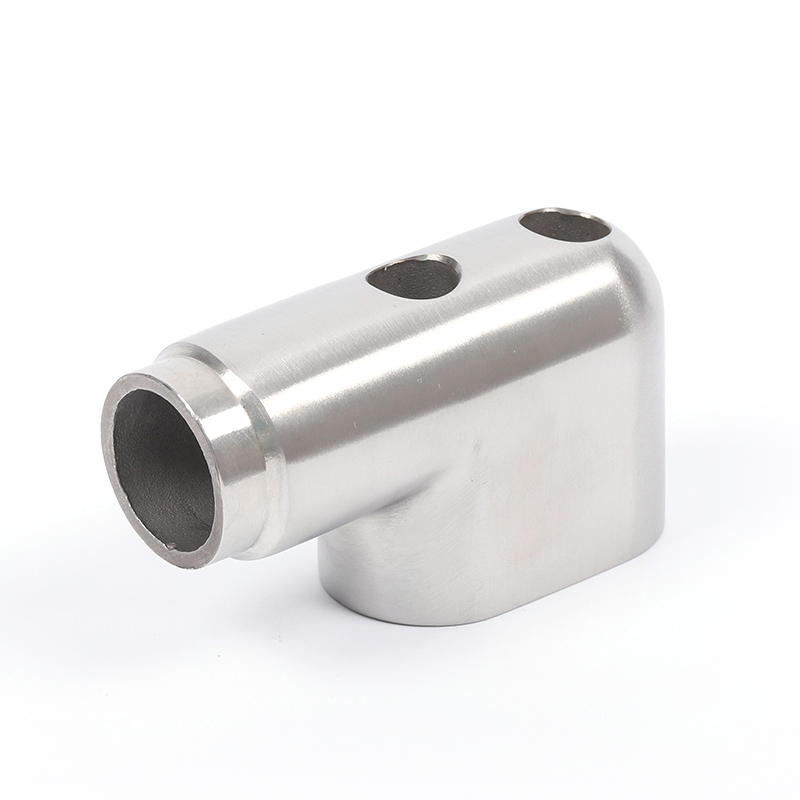
Investment casting — also called lost wax casting or precision casting — is a manufacturing process that produces complex, high-precision metal parts by building a ceramic shell around a wax pattern, melting the wax out, and pouring molten metal into the resulting cavity. It's the process of choice when a part needs tight tolerances (typically ±0.005 inches, or roughly ±1% of nominal dimension), a smooth as-cast surface finish, and geometry too complex for machining or forging — internal channels, thin walls, undercuts, and near-vertical surfaces with minimal draft.
Because the process produces a near-net or fully net shape, it often eliminates the need for extensive secondary machining, which is why it remains the standard for turbine blades, orthopedic implants, and structural aerospace components where both precision and material efficiency matter.
The Investment Casting Process Step by Step
The full process runs through a consistent sequence of stages, each of which directly affects the dimensional accuracy and surface quality of the finished part.
- Die creation: A precision aluminum or steel die is machined to the shape of the part, accounting for material shrinkage at every downstream stage.
- Wax pattern injection: A blend of paraffin and microcrystalline wax is injected into the die at roughly 70-90°C, replicating the part's geometry down to internal channels and sharp corners.
- Pattern assembly ("tree building"): Multiple wax patterns are attached to a central wax sprue, forming a "tree" that allows several parts to be cast in a single pour.
- Ceramic shell building: The wax tree is repeatedly dipped in ceramic slurry (commonly colloidal silica with zircon or alumina flour) and coated with coarse stucco particles, building up a shell strong enough to hold molten metal. Each layer must dry fully before the next is applied.
- Dewaxing: The shell is heated in an autoclave or flash-fire oven, melting and removing the wax to leave a hollow ceramic mold.
- Burnout and firing: The empty shell is fired at high temperature to remove residual wax and strengthen the ceramic ahead of pouring.
- Metal pouring: Molten metal — often exceeding 2,800°F for high-temperature alloys — is poured into the still-hot shell to fill the cavity completely and capture fine surface detail.
- Divesting and finishing: Once cooled, the ceramic shell is broken away, parts are cut from the sprue tree, and finishing operations (grinding, blasting, heat treatment) complete the part.
Dimensional Accuracy: What the Data Actually Shows
Accuracy in investment casting is controlled at multiple stages, not just at the final pour. Wax pattern dies for series production are typically CNC-machined to ±0.01 mm tolerances, and the wax injection step itself introduces measurable shrinkage — studies on wax patterns used for turbine blade casting found a dimensional reduction of roughly 0.2-0.4% occurring during the ceramic dipping stage alone. Because each step compounds slightly, engineers apply calculated shrinkage allowances in the original CAD model to land within final tolerance after wax injection, shell building, and metal cooling.
| Process Stage | Typical Precision |
|---|---|
| Wax pattern die machining | ±0.01 mm |
| Shrinkage during ceramic dipping | 0.2% - 0.4% dimensional reduction |
| Final cast part tolerance | ±0.005 in. (roughly ±1% of nominal dimension) |
| Standard as-cast surface finish | 125 microinch (Ra), finer possible |
Shell thickness uniformity also plays a direct role in accuracy — uneven shell buildup around a pattern (often caused by centrifugal effects during slurry dipping) has been shown to correlate directly with dimensional deviation in the final part, which is why wax pattern orientation during dipping is a controlled variable in high-precision production.
Investment Casting vs Other Metal Casting Methods
Compared to Sand Casting
Sand casting is cheaper for large, simple parts but delivers a rougher surface finish and looser tolerances. Investment casting also produces no parting line, since it uses a single-piece ceramic shell rather than two mating mold halves — sand casting's two-half mold always leaves a visible seam that requires cleanup.
Compared to Die Casting
Die casting is faster and better suited to high-volume production, but it's limited to non-ferrous alloys, while investment casting supports a much broader material range, including high-temperature superalloys and stainless steels used in aerospace and turbine applications.
Compared to CNC Machining
Machining a complex part from billet wastes significant material and can't easily create internal passages. Investment casting produces the geometry directly, often needing only light finish machining on critical surfaces — reducing both material waste and machining time for complex parts.
When Investment Casting Is the Right Choice
- The part has complex internal geometry, thin walls, or undercuts that machining tools can't reach.
- Several separate components can be consolidated into a single casting, improving accuracy and reducing assembly complexity.
- The application demands tight, repeatable tolerances across production runs for part-to-part interchangeability.
- The material is difficult or costly to machine, such as high-nickel superalloys used in turbine components.
- A smooth as-cast surface finish is required without extensive secondary polishing or grinding.
Industries That Rely on Investment Casting
Investment casting has a long track record in sectors where failure isn't an option: gas turbine engines, aerospace structural components, petroleum and chemical processing equipment, defense hardware, and medical devices such as orthopedic implants. Its combination of tight tolerance control, complex geometry capability, and broad alloy compatibility is why it remains the standard precision casting method across these industries decades after its adoption.